

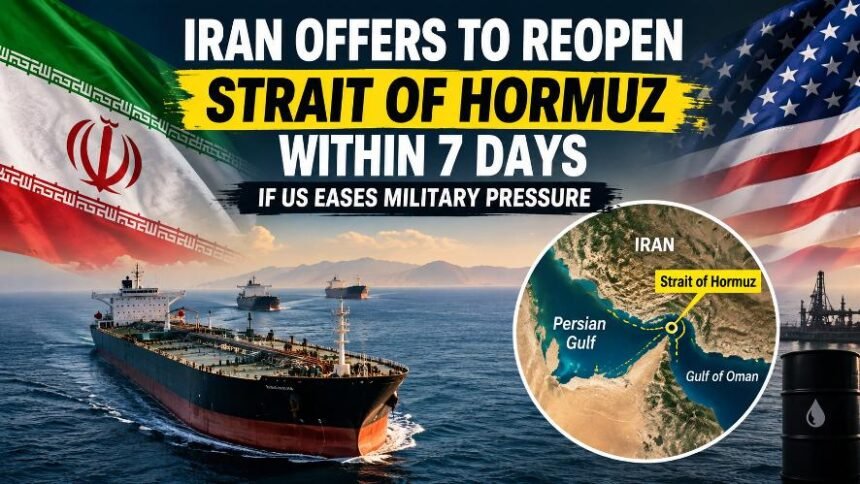
Iran has reportedly sent a major diplomatic signal to the United States, offering to reopen the strategically vital Strait of Hormuz within seven days if Washington reduces military pressure and lifts its blockade on Iranian ports. The proposal comes as tensions between Tehran and Washington remain high and world markets closely monitor the impact on oil supplies.
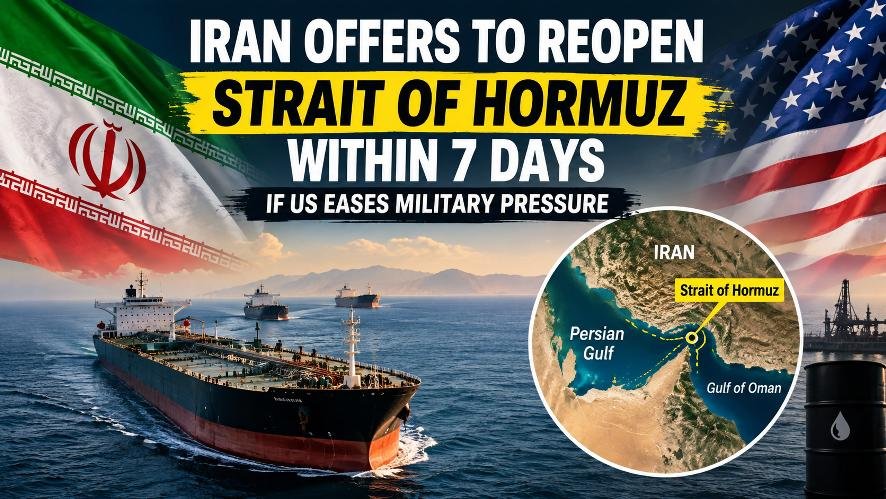
A senior Iranian official told Reuters that the Iranian delegation currently in New York for the United Nations General Assembly (UNGA) has been given full authority to pursue diplomatic discussions with the United States.
However, the report remains contested. Iran’s semi-official Fars News Agency later rejected the Reuters/Kyodo reports, saying Iranian sources had described them as invalid and untrue.
Iran Ready for Diplomatic Talks
According to Reuters, Tehran has indicated that its delegation at the UN General Assembly has the authority to restart stalled diplomatic negotiations with Washington.
The reported proposal would involve initial steps by the United States to reduce military pressure and lift the blockade on Iranian ports. In return, Iran could reopen the Strait of Hormuz within seven days.
The Iranian proposal was reportedly conveyed to Washington through intermediaries earlier this month and is aimed at creating a pathway toward renewed negotiations.
Why Is the Strait of Hormuz So Important?
The Strait of Hormuz is one of the world’s most strategically important maritime chokepoints.
A large volume of global oil and energy shipments passes through the narrow waterway connecting the Persian Gulf with the Gulf of Oman and the Arabian Sea.
Any prolonged disruption can affect shipping routes, insurance costs and global energy markets. Reuters reported Tuesday that oil prices fell as markets reacted to the possibility of increased Gulf supplies following Iran’s reported signal.
Strait Has Been at the Centre of the US-Iran Conflict
The waterway has become a major flashpoint during the ongoing conflict between Iran and the United States.
Recent weeks have seen attacks and confrontations involving tankers and military vessels around the Strait of Hormuz. The US has also maintained a naval blockade aimed at restricting Iranian oil exports.
The disruption has already had significant consequences for the energy trade. Reuters reported earlier this month that Iran had gone for weeks without meaningful crude exports through the Strait amid the blockade.
What Happens Next?
The reported seven-day proposal places the focus on Washington’s response.
If the proposal is confirmed and diplomatic contacts resume, the Strait of Hormuz could become a central part of negotiations between the two countries.
But for now, there is no confirmed agreement to reopen the waterway. The Reuters report has also been publicly disputed by Fars News Agency.
The coming days at the UN General Assembly could therefore be important for determining whether the reported proposal develops into formal negotiations or remains an unconfirmed diplomatic signal.
Bottom Line
Iran has reportedly offered to reopen the Strait of Hormuz within seven days if the US reduces military pressure and lifts its blockade on Iranian ports. The proposal could create an opening for renewed US-Iran diplomacy, but Iran’s Fars News Agency has disputed the reporting.
For global energy markets, any confirmed reopening of the waterway would be closely