

Reels can be fun, informative, and a quick way to relax. But what starts as “just five minutes” can easily turn into an hour of endless scrolling. Reels addiction refers to a pattern of excessive or difficult-to-control short-video use that begins interfering with everyday life.
From reduced concentration and poor sleep to procrastination and constant phone checking, excessive scrolling can affect both your routine and mental well-being. The good news is that you don’t have to quit social media completely. A few simple changes can help you regain control of your screen time.
What Is Reels Addiction?
Reels addiction isn’t a formal medical diagnosis. The term is commonly used to describe compulsive or excessive short-form video consumption.
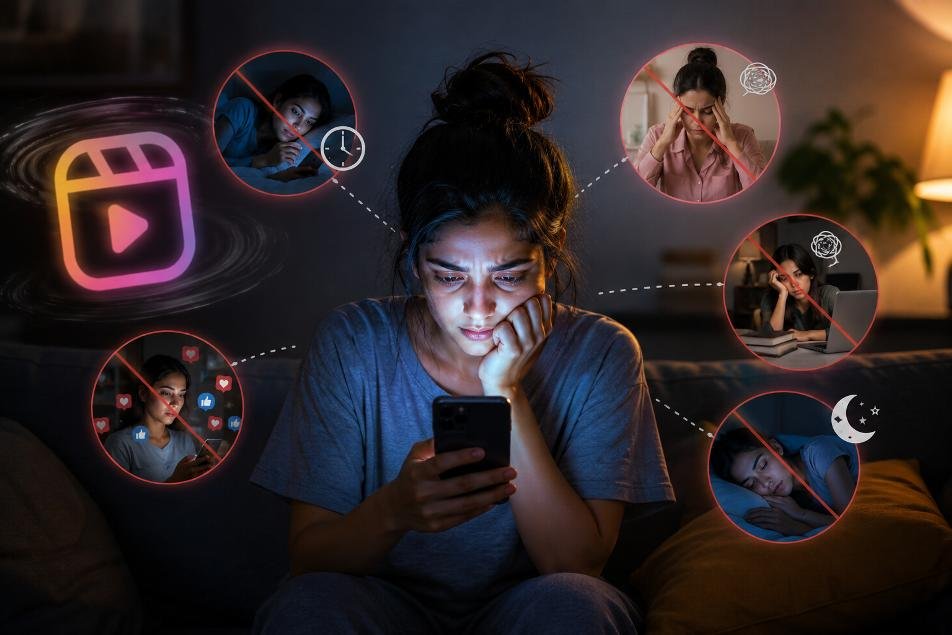
Reels are designed to keep users engaged with an endless stream of personalized videos. Because each video is short, it can feel easy to watch “one more”—until a significant amount of time has passed.
Signs You May Be Addicted to Reels
You may need to rethink your scrolling habits if you regularly:
- Spend much longer watching reels than planned.
- Check Instagram or other short-video apps repeatedly throughout the day.
- Feel restless or bored when you cannot scroll.
- Use reels to avoid work, studying, or other responsibilities.
- Stay up late because you keep watching videos.
- Find it difficult to concentrate on books, work, or longer videos.
- Keep scrolling even when you know you should stop.
One occasional long scrolling session doesn’t necessarily mean addiction. The bigger warning sign is a repeated lack of control over your usage.
Side Effects of Excessive Reels Watching
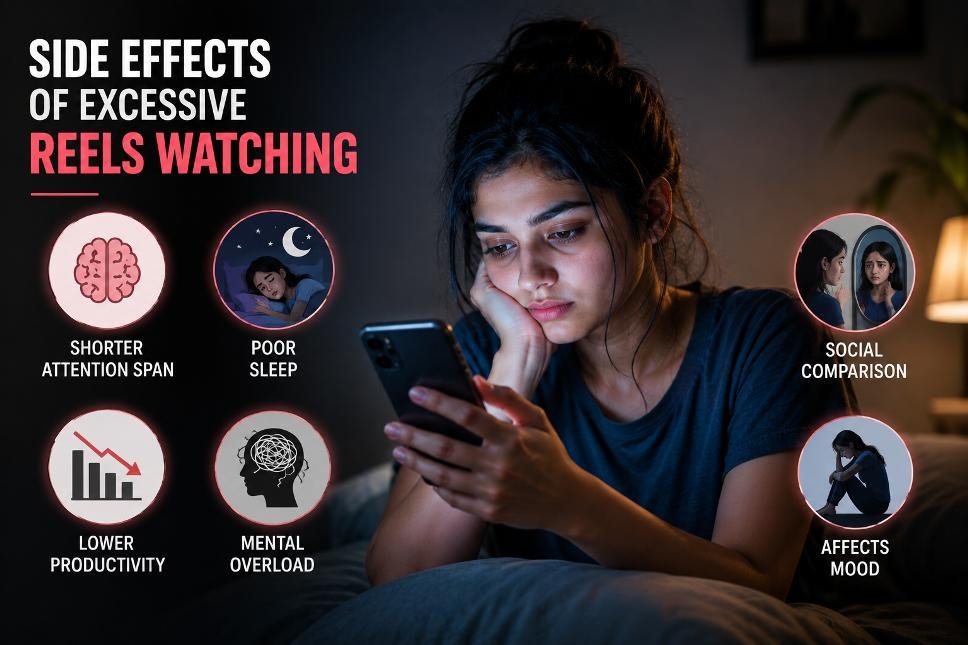
1. Shorter Attention Span
Constantly switching between fast-paced videos can make slower activities feel less exciting, potentially making sustained concentration more difficult.
2. Poor Sleep
Scrolling late at night can delay bedtime and keep your mind stimulated when it should be winding down.
3. Lower Productivity
A quick break can become an extended scrolling session, taking time away from work, studies, exercise, and other priorities.
4. Mental Overload
Consuming a continuous stream of rapidly changing content can leave you feeling mentally tired rather than refreshed.
5. Social Comparison
Seeing carefully edited lifestyles and achievements online can sometimes encourage unrealistic comparisons and negatively affect self-image.
How to Stop Excessive Reels Scrolling
You don’t have to delete every social media app. Start by making scrolling harder to do automatically.
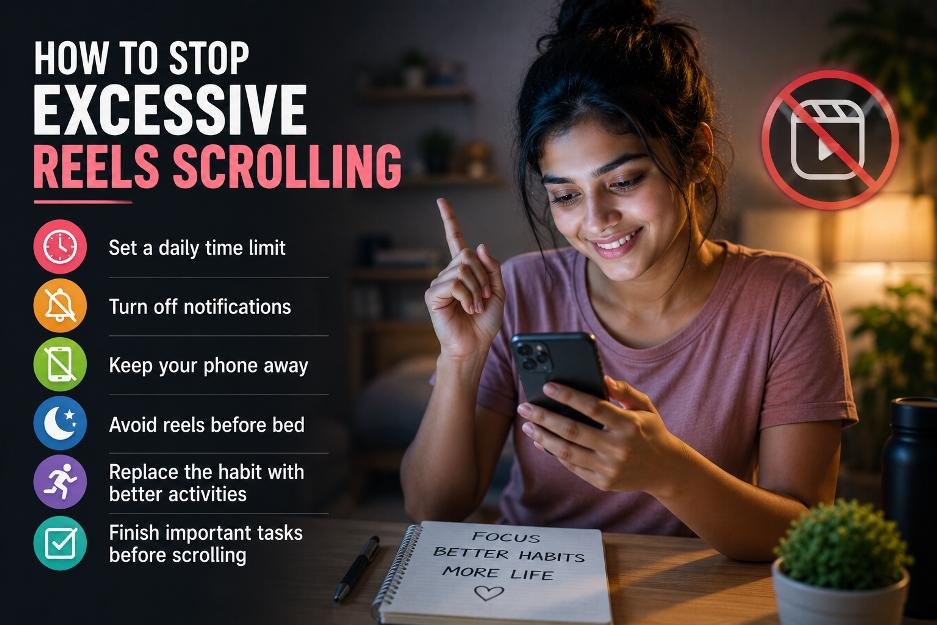
Try these simple steps:
- Set a daily limit: Decide how much time you actually want to spend watching reels.
- Turn off notifications: Fewer alerts mean fewer reasons to open the app.
- Keep your phone away: Especially while studying, working, eating, or sleeping.
- Avoid reels before bed: Give yourself screen-free time at night.
- Replace the habit: Go for a walk, read, exercise, listen to music, or talk to someone instead.
- Use the “one-task first” rule: Finish an important task before opening your social media app.
The Bottom Line
Reels aren’t automatically bad, but excessive scrolling can become a problem when it starts controlling your time and attention. If you frequently lose track of time, neglect responsibilities, or struggle to stop watching, it’s worth changing your habits.
Start small: reduce your daily scrolling, create phone-free periods, and give your brain more time away from short-form content. The goal isn’t to never watch reels—it’s to make sure you are choosing when to watch them, rather than scrolling automatically.