

Raksha Bandhan is one of India’s most heartwarming festivals, celebrating the timeless bond of love and protection between brothers and sisters. Every year, on the full moon day (Purnima) of the Hindu month of Shravana, sisters tie a sacred thread called a rakhi around their brothers’ wrists, praying for their long life and happiness. In return, brothers vow to protect and stand by their sisters for life.
- Raksha Bandhan 2026: Date and Shubh Muhurat
- What Does Raksha Bandhan Mean?
- History and Origin of Raksha Bandhan
- Significance of Raksha Bandhan
- Raksha Bandhan Celebrations Across India
- Rituals and Traditions of Raksha Bandhan
- Modern Ways to Celebrate Raksha Bandhan 2026
- Raksha Bandhan Gift Ideas
- Frequently Asked Questions (FAQs)
- Conclusion
In 2026, Raksha Bandhan falls on Friday, 28 August, and this year brings a particularly auspicious start, since the traditionally inauspicious Bhadra period ends before sunrise. This guide covers everything you need to know about Raksha Bandhan 2026 — the exact date and shubh muhurat, the history and mythology behind the festival, its deeper meaning, and how it is celebrated across India and beyond.
Raksha Bandhan 2026: Date and Shubh Muhurat
| Detail | Information |
|---|---|
| Festival | Raksha Bandhan (Rakhi) |
| Date | Friday, 28 August 2026 |
| Hindu Calendar Reference | Shravana Purnima |
| Purnima Tithi Begins | 09:08 AM, 27 August 2026 |
| Shubh Muhurat (Thread-Tying Time) | 05:57 AM – 09:48 AM IST |
| Muhurat Duration | 3 hours 51 minutes |
| Bhadra Status | Ends before sunrise — entire morning is auspicious |
Why 2026 is considered especially auspicious: Rakhi is traditionally not tied during the Bhadra period, which is regarded as an inauspicious time in Hindu astrology. In many years, Bhadra stretches into the afternoon or evening, forcing families to delay the ceremony. In 2026, however, Bhadra concludes before sunrise on 28 August, which means the entire morning is free for the rakhi ceremony — a rare convenience for families planning their celebrations.
What Does Raksha Bandhan Mean?
- Raksha means “protection,” and Bandhan means “bond” or “tie” — together, the phrase translates to “the bond of protection.”
- The festival is also known by regional names such as Rakhi Purnima, Saluno, and Silono.
- It falls during Shravana (July–August), considered one of the holiest months in the Hindu lunar calendar.
- While rooted in Hindu tradition, Raksha Bandhan today is celebrated across communities and religions in India and among the Indian diaspora worldwide.
History and Origin of Raksha Bandhan
The festival’s roots stretch back through mythology, medieval history, and even the freedom movement. Some of the most popular legends and historical accounts include:
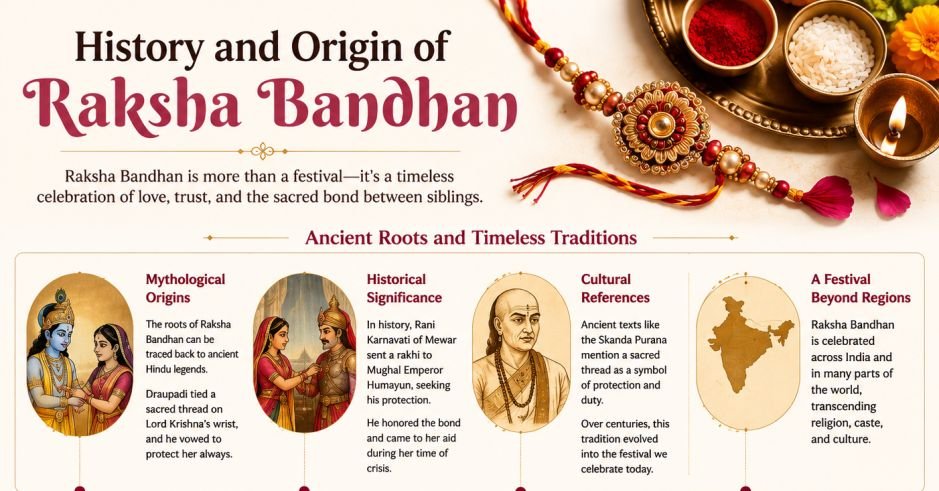
- Indra and Sachi: In an old Puranic legend, Indra’s wife Sachi tied a sacred protective thread on his wrist before he went into battle against demons, helping him secure victory.
- Krishna and Draupadi: According to the Mahabharata, Draupadi once tore a strip of cloth from her saree to bandage Lord Krishna’s bleeding finger. Touched by her gesture, Krishna promised to protect her — a vow he famously honored years later.
- Yama and Yamuna: As per legend, the river goddess Yamuna tied a rakhi to her brother Yama, the god of death, who was so moved that he granted her immortality and declared that any brother protected by his sister’s rakhi would be shielded from harm.
- Rani Karnavati and Emperor Humayun: A well-known medieval account tells of Rani Karnavati of Chittor sending a rakhi to Mughal Emperor Humayun, appealing for help against an invading army. Humayun is said to have set out to defend her kingdom in response.
- Alexander and King Porus: Popular folklore (though not confirmed by historians) suggests that Alexander the Great’s wife sent a rakhi to King Porus, asking him to spare her husband’s life in battle.
- Rabindranath Tagore’s Rakhi Utsav: During the 1905 Partition of Bengal, poet Rabindranath Tagore encouraged Hindus and Muslims to tie rakhis on one another as a symbol of unity and brotherhood, transforming the festival into a broader message of communal harmony.
Significance of Raksha Bandhan
- Celebrates sibling love: At its heart, the festival honors the affection, care, and lifelong support shared between brothers and sisters.
- Not limited to blood relations: Cousins, close friends, and even soldiers protecting the nation are often included in the celebration, with rakhis symbolizing bonds of trust rather than only biology.
- A promise of protection: The rakhi represents a mutual pledge — sisters pray for their brothers’ well-being, while brothers commit to standing by their sisters through life’s challenges.
- Strengthens family ties: The festival is a major occasion for family reunions, especially for siblings living apart.
- A symbol of unity: As popularized by Tagore, Raksha Bandhan has also stood for harmony that goes beyond religion and community lines.
Raksha Bandhan Celebrations Across India
While the core ritual remains similar, Raksha Bandhan takes on distinct regional flavors across the country.
| Region | Local Name / Custom |
|---|---|
| North India | Family gatherings, rakhi-tying in the morning, sweets and gifts |
| Maharashtra & Goa | Coincides with Narali Purnima; coconuts are offered to the sea |
| Gujarat | Known as Pavitropana, often linked with Shiva worship |
| Odisha & Eastern India | Observed as Jhulan Purnima or Gamha Purnima, with rituals honoring cattle and agriculture |
| South India | Marked as Avani Avittam, when Brahmin men change their sacred thread (janeu) |
| West Bengal | Continues Tagore’s tradition of tying rakhis to friends and neighbors as a symbol of unity |
Rituals and Traditions of Raksha Bandhan
The core ceremony is simple, warm, and steeped in symbolism. Here’s how it typically unfolds:
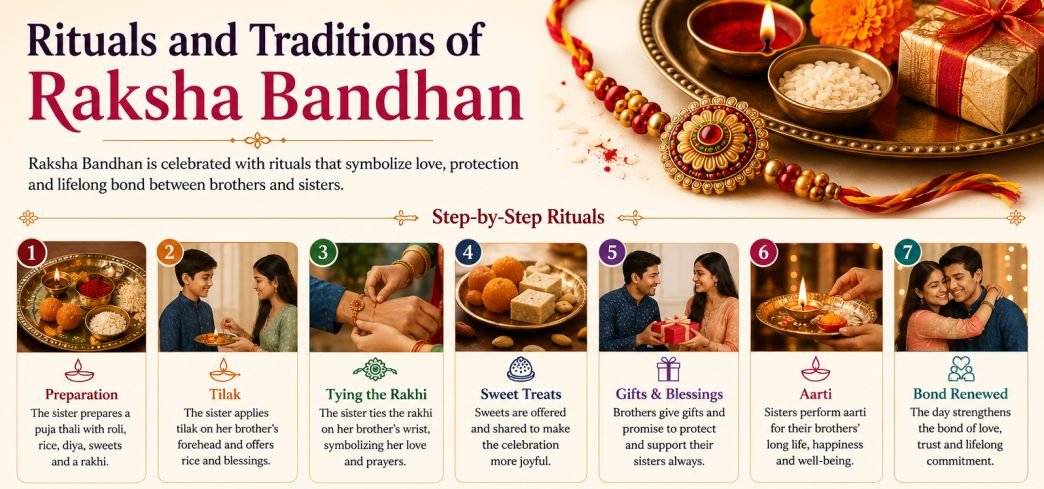
- Preparing the thali: A decorated plate is arranged with a rakhi, roli (vermillion), rice grains, a diya (lamp), and sweets.
- Aarti and tilak: The sister performs a small aarti and applies a tilak on her brother’s forehead as a mark of blessing.
- Tying the rakhi: She ties the sacred thread around her brother’s right wrist while praying for his health and prosperity.
- Exchanging sweets: Siblings feed each other traditional Indian sweets to mark the sweetness of their bond.
- The brother’s promise: The brother renews his vow to protect and support his sister, often accompanied by a gift or token of blessing.
Modern Ways to Celebrate Raksha Bandhan 2026
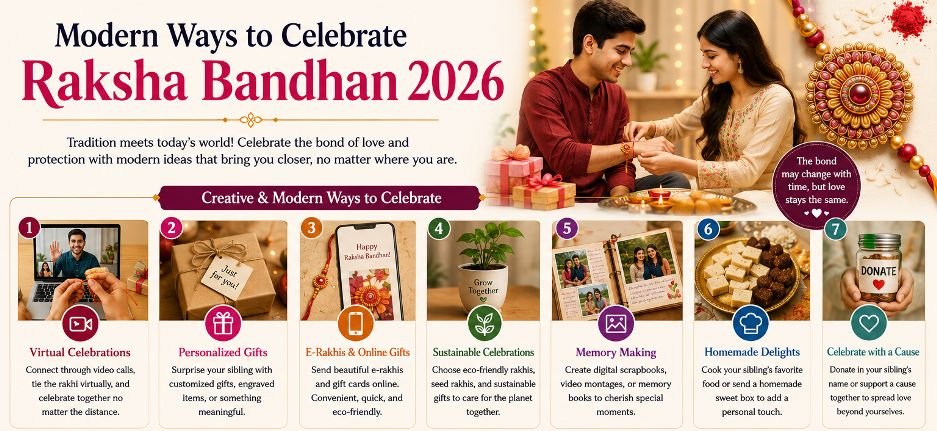
- Eco-friendly rakhis: Rakhis made from seeds, cloth, or jute are gaining popularity over plastic and synthetic versions.
- Rakhis for long-distance siblings: Many families now courier rakhis to relatives abroad well in advance, or hold video-call ceremonies when an in-person visit isn’t possible.
- Rakhi for soldiers: Numerous community groups and schools organize drives to send rakhis to soldiers stationed at the border, extending the spirit of protection to the nation’s defenders.
- Thoughtful, personalized gifts: Beyond traditional cash gifts, personalized hampers, experience vouchers, and digital gift cards are becoming popular ways for brothers to celebrate their sisters.
Raksha Bandhan Gift Ideas
- Personalized jewelry, watches, or accessories
- Books, journals, or subscription gifts
- Home-baked sweets or curated gift hampers
- Digital gift cards or experience vouchers
- Handmade or sustainable rakhi sets
Frequently Asked Questions (FAQs)
When is Raksha Bandhan in 2026?
Raksha Bandhan will be celebrated on Friday, 28 August 2026.
What is the shubh muhurat for tying rakhi in 2026?
The auspicious time is between 05:57 AM and 09:48 AM IST on Friday, 28th August 2026. Bhadra Kaal ends before sunrise this year, so the entire morning window is clear for the ceremony.
Is there a Bhadra period to avoid in 2026?
No — Bhadra ends before sunrise on 28 August 2026, so the entire morning is considered safe for the ceremony.
Can Raksha Bandhan be celebrated with cousins or friends, not just biological siblings?
Yes. While rooted in the bond between brothers and sisters, the festival is widely celebrated among cousins, close friends, and even symbolic “brothers” and “sisters.”
Which wrist should the rakhi be tied on?
Traditionally, the rakhi is tied on the brother’s right wrist.
Conclusion
Raksha Bandhan 2026, falling on Friday, 28 August, arrives with an especially favorable muhurat this year, giving families a stress-free morning to celebrate the enduring bond between siblings. Whether observed with age-old rituals, regional customs, or modern touches like eco-friendly rakhis and virtual celebrations, the festival remains a beautiful reminder of love, protection, and togetherness that transcends distance and generations.