

Artificial intelligence is expanding rapidly, with technology companies investing trillions of dollars in chips, data centres and AI products. But public enthusiasm is not keeping pace with the industry’s optimism. A new Pew Research Center survey shows that a growing number of Americans, particularly young adults, are more concerned than excited about AI.
The findings highlight a widening gap between the technology industry’s confidence in AI and public concerns about jobs, costs, the environment and the wider impact of automation.
Young Americans Are Increasingly Concerned About AI
According to Pew Research Center, 55% of US adults under 30 said they feel more concerned than excited about AI becoming part of everyday life.
That figure has increased sharply from 39% in 2024, showing that concerns about artificial intelligence have grown significantly among younger Americans.
Pew surveyed 3,488 US adults between June 22 and June 28, 2026.
How Americans Feel About AI
| Age group | More concerned than excited |
|---|---|
| Under 30 | 55% |
| 30–49 | 51% |
| 50–64 | 47% |
| 65 and older | 59% |
| All US adults | 52% |
Across all age groups, 52% of Americans said they are more concerned than excited about AI, compared with 37% in 2021.
Only about one in 10 Americans said they are more excited than concerned, while around one-third said they feel equally concerned and excited.
Americans Fear AI Could Reduce Jobs
Job losses are emerging as one of the biggest concerns surrounding AI.
Pew found that 71% of Americans believe AI will lead to fewer job opportunities over the next two decades, up from 64% in 2024.
The concern is particularly strong among younger adults.
- 73% of adults under 30 believe AI will reduce job opportunities.
- That figure was 61% in 2024.
- Among adults aged 65 and older, 63% expect AI to reduce jobs.
- Overall, 71% of US adults expect fewer employment opportunities because of AI.
The findings suggest that younger workers, despite being among the most familiar with new technology, are increasingly worried about how AI could affect their careers.
AI Companies Continue to Bet Big
While public concern is rising, major technology companies continue to spend enormous amounts on artificial intelligence.
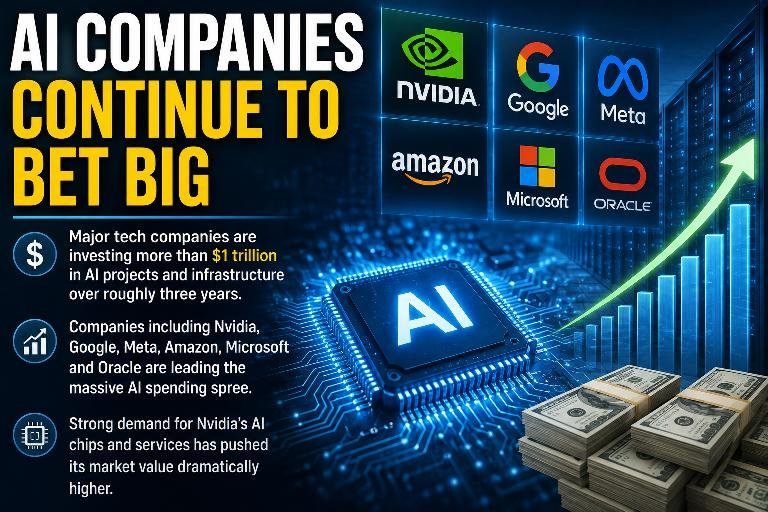
Companies including Nvidia, Google, Meta, Amazon, Microsoft and Oracle have collectively invested more than $1 trillion in AI projects and infrastructure over roughly three years, according to the information in the report.
As technology companies continue investing heavily in chips, data centres and AI infrastructure, the rising cost of technology is also being felt by consumers. Read our detailed analysis: “Why Are Smartphones Getting So Expensive in India” because of AI.
The AI boom has also benefited companies supplying the technology. Strong demand for Nvidia’s AI chips and services has helped push its market value dramatically higher.
Why Companies Are Investing So Heavily in AI
The technology industry argues that AI can:
- Increase productivity
- Automate repetitive tasks
- Create new types of jobs
- Help businesses reduce costs
- Improve software and digital services
- Drive economic growth
However, the scale of investment is also raising questions about whether the enormous spending can eventually translate into sustainable profits.
The Risk of Circular AI Financing
Another concern is the growing use of what is sometimes described as “circular” financing within the AI ecosystem.
In a circular financing arrangement, one company may invest in, lend money to, or purchase products from another company. The second company may then use that funding to purchase products or services from the first company.
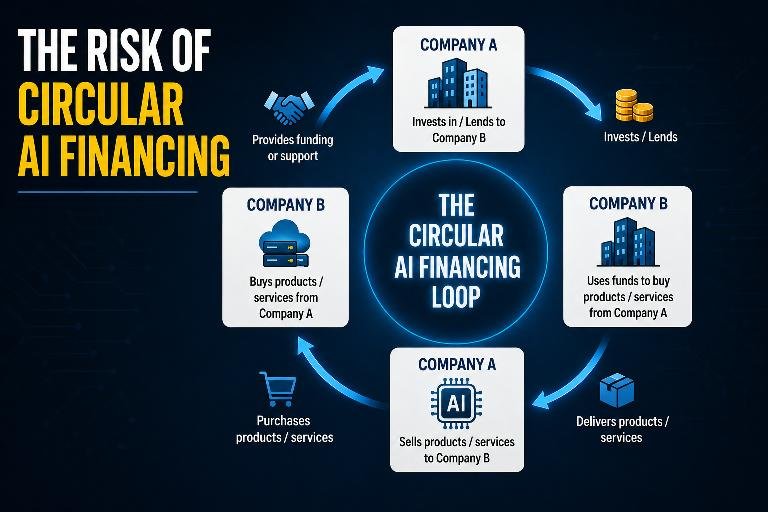
As AI companies and infrastructure providers become increasingly interconnected, questions are emerging about what could happen if one major player faces financial difficulties.
Key concern: If AI spending slows significantly, could financial problems at one company affect others across the industry?
AI Is Also Creating High-Paying Jobs
Despite concerns about job losses, AI is simultaneously creating strong demand for specialised workers.
AI engineers and other technology professionals are increasingly sought after, with companies offering substantial compensation packages that can include salaries, stock options and restricted stock units (RSUs).
A LinkedIn analysis highlighted 12 of the fastest-growing AI jobs, focusing on roles related to AI engineering and technology development.
According to the data cited in the report:
| Job market trend | Finding |
|---|---|
| US AI job postings since 2023 | Roughly doubled |
| Typical AI job compensation | About $177,000 |
| Typical non-AI job compensation | About $80,000 |
The figures show the growing economic divide within the AI-driven job market. While demand for highly specialised AI talent is increasing, workers in other professions remain concerned about automation and changing employment requirements.
Who Will Benefit From the AI Boom?
The rapid growth of artificial intelligence is creating both opportunities and uncertainty.
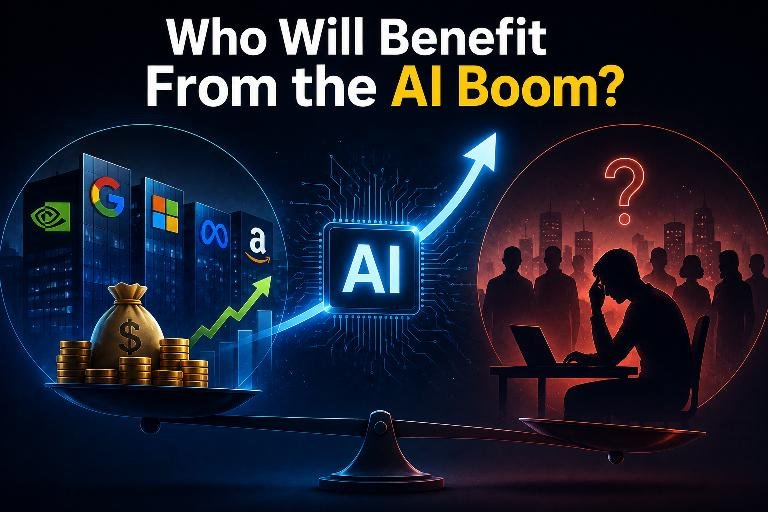
Potential winners include:
- AI engineers and technical specialists
- Chip manufacturers
- Cloud computing companies
- AI infrastructure providers
- Businesses that successfully use AI to increase productivity
Potentially vulnerable groups include:
- Workers performing repetitive tasks
- Employees in highly automatable roles
- Professionals whose skills become outdated
- Workers without access to AI-related training
The central question is no longer simply whether AI will transform the economy. It is who will benefit from that transformation and who could be left behind.
As companies continue pouring money into AI, public concerns about employment, affordability and economic inequality are likely to remain a major part of the debate surrounding the technology.