

Smart glasses are moving beyond simple cameras and audio devices. Meta’s AI-powered glasses can capture photos and video, respond to voice commands, and use artificial intelligence to understand what the wearer is seeing. But as these devices become more capable, concerns over privacy, surveillance and piracy are also growing.
- Why Are Meta Smart Glasses Raising Privacy Concerns?
- What Data Can AI Glasses Capture?
- The Piracy Problem
- Smart Glasses Are Also Facing Courtroom Restrictions
- Privacy Regulators Are Taking Notice
- AI Makes the Privacy Question More Complicated
- Are On-Device AI Systems the Answer?
- What Should Users Do?
- The Future of Wearable Privacy
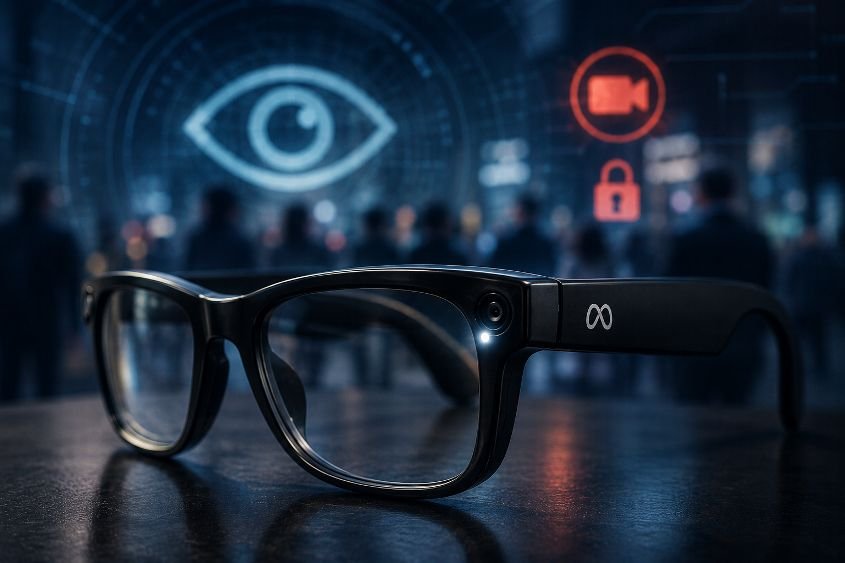
The debate intensified in August 2026, with cinemas and courts in the UK restricting the use of camera-enabled smart glasses. At the same time, privacy advocates in Germany have raised legal concerns about whether the devices can enable people to record others without their knowledge.
Why Are Meta Smart Glasses Raising Privacy Concerns?
Unlike a smartphone, smart glasses can record while appearing to be ordinary eyewear. This creates a difficult privacy problem: a person standing nearby may not immediately know whether they are being photographed, filmed, or recorded.
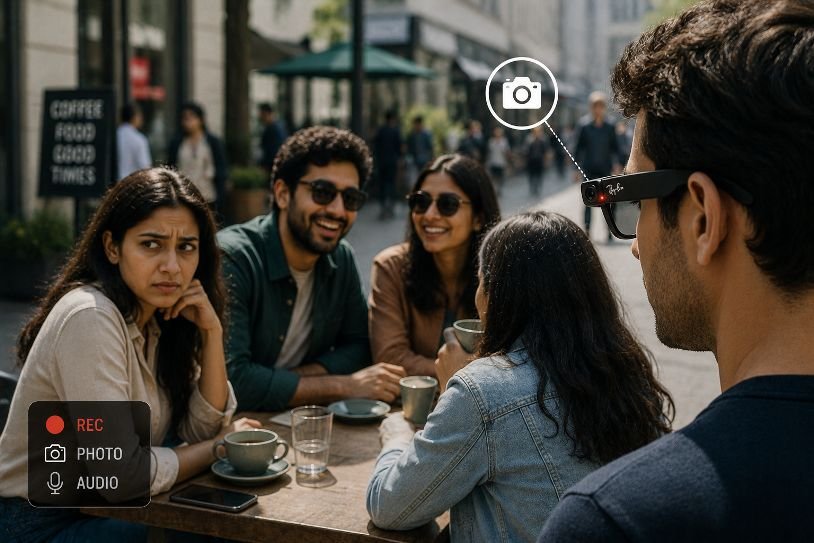
Meta’s Ray-Ban Meta glasses include a capture LED designed to indicate when the camera is being used. Meta says users should respect the privacy of people around them and that the LED provides a visible signal when the camera is active.
However, critics argue that a small indicator light may not always be obvious in busy public environments.
The concern becomes greater when smart glasses are used in workplaces, schools, hospitals, restaurants or other places where people reasonably expect a degree of privacy.
What Data Can AI Glasses Capture?
The privacy debate is not only about video.
Meta’s documentation explains that its multimodal AI systems can work with inputs including images, video, audio and spoken prompts. With Ray-Ban Meta glasses, a user can activate Meta AI with a voice command, after which captured images and speech can be processed by the AI system to generate a response.
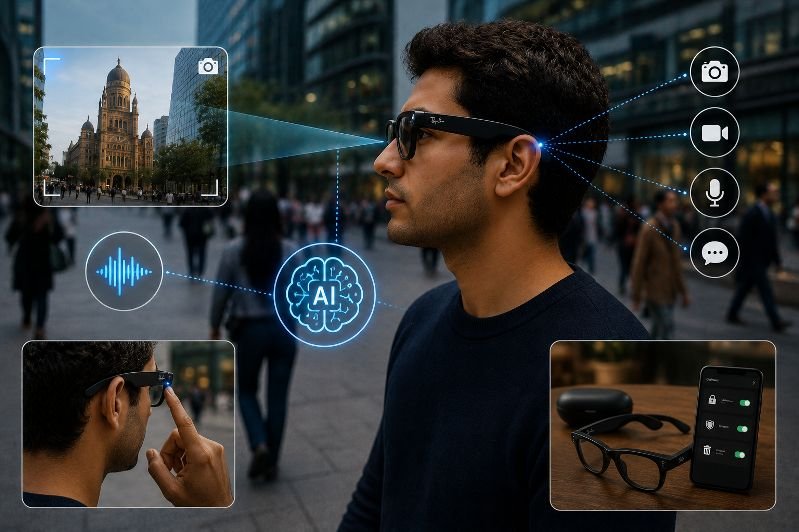
That means the device can potentially interact with information from the wearer’s surroundings rather than simply taking a photograph.
This creates a much bigger question: who controls the information captured by an AI device that is constantly close to a person’s eyes and ears?
Meta provides privacy controls that allow users to manage settings, view certain stored information and delete media from their gallery. The company also says users can control location services and choose whether to use Meta AI.
The Piracy Problem
One of the newest concerns involves movie piracy.
Camera-enabled smart glasses can potentially be used to record films inside cinemas without openly holding up a phone or camera. That has prompted UK cinema operators to introduce policies restricting or prohibiting smart glasses.
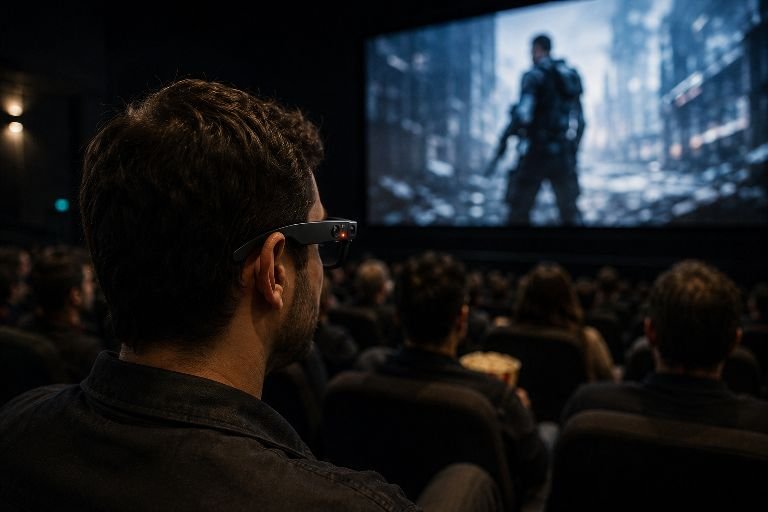
The UK Cinema Association recently announced measures addressing camera-enabled smart glasses amid concerns about unauthorized recording and piracy.
The technology therefore creates a challenge for cinemas: traditional anti-recording measures are designed around phones and handheld cameras, while smart glasses can make recording much less noticeable.
Smart Glasses Are Also Facing Courtroom Restrictions
The concerns extend beyond cinemas.
Courts in England and Wales have restricted the use of Meta smart glasses in courtrooms because of rules against unauthorized photography and filming.
Courtrooms are particularly sensitive environments because recordings can involve victims, witnesses, lawyers, defendants and confidential evidence.
The restrictions demonstrate how institutions are beginning to treat AI glasses differently from ordinary eyewear because of their recording capabilities.
Privacy Regulators Are Taking Notice
Germany has become another important battleground in the privacy debate.
Digital rights group HateAid filed a criminal complaint in August against Meta and companies involved in selling its AI-enabled glasses, arguing that the technology could facilitate covert filming without consent. German authorities are conducting a preliminary investigation into the complaint.

German regulations do not automatically prohibit smart glasses, but concerns can arise when recording is not sufficiently noticeable.
The case highlights a broader problem for technology companies: privacy laws were largely developed before cameras and AI assistants became embedded in everyday objects such as glasses.
AI Makes the Privacy Question More Complicated
Traditional camera privacy concerns were relatively straightforward. Someone records a video, stores it and potentially shares it.
AI changes the equation.
A smart-glasses system can potentially analyze what the wearer is looking at, recognize objects or text and use visual information to provide answers. Meta has also been researching systems capable of understanding first-person video and retrieving information from long streams of footage captured through smart glasses.
This could make the technology extremely useful. A wearer might ask for a translation of a sign, identify an object or receive information about something in front of them without taking out a phone.
But the same capability raises questions about the people and private information appearing in the camera’s field of view.
Are On-Device AI Systems the Answer?
One possible solution is processing more information directly on the glasses instead of sending everything to remote servers.
Meta has increasingly promoted on-device AI, saying local processing can offer advantages in speed, bandwidth and privacy. Its newer technology allows some AI experiences to run directly on devices, including smart glasses.
However, on-device processing cannot eliminate every privacy concern. The device still has cameras and microphones, and people nearby may still be captured.
The challenge is therefore not simply where the data is processed. It is also about consent, transparency and responsible use.
What Should Users Do?
People using Meta smart glasses can reduce privacy risks by following a few basic practices:
- Avoid recording people without their knowledge or consent.
- Turn off features you do not need.
- Review privacy and location settings regularly.
- Delete stored media and information when appropriate.
- Follow restrictions in cinemas, courts, workplaces and other sensitive locations.
- Be particularly careful when recording children, patients or confidential information.
People around smart-glasses users should also be aware that visible recording indicators may not always be easy to notice.
The Future of Wearable Privacy
Meta’s smart glasses represent a major shift in how people interact with technology. Instead of reaching for a smartphone, users can access AI through a device that is already sitting on their face.
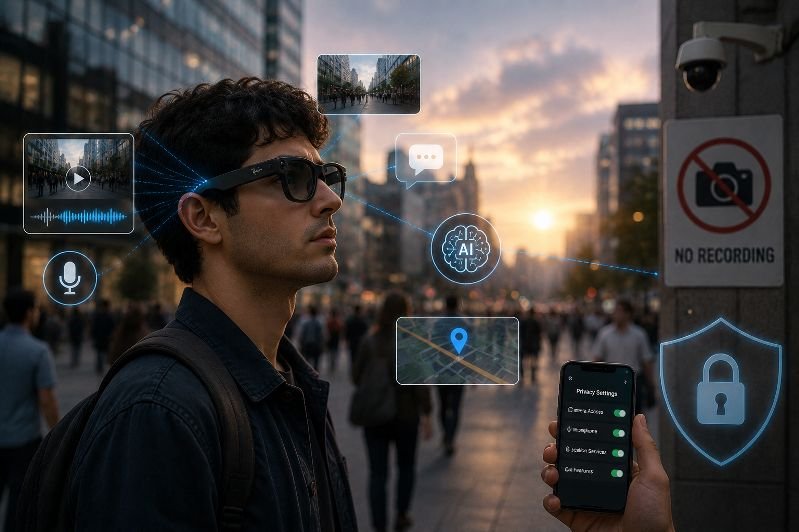
That convenience could make smart glasses an important part of the next generation of consumer technology.
But their success may ultimately depend on something beyond better cameras or smarter AI: public trust.
If people begin to feel that they can be recorded or analyzed anywhere without their knowledge, governments, businesses and consumers may impose stricter restrictions.
The debate over Meta smart glasses therefore goes beyond one product. It raises a much bigger question about the future of privacy in a world where cameras, microphones and artificial intelligence can be built into everyday objects.