

Care for Tulsi in Winter: Winter can be a challenging season for Tulsi plants, especially when temperatures drop and sunlight becomes weaker. With a little extra care, however, your Tulsi can stay healthy, green, and ready to grow when warmer weather returns.

The good news is that you don’t need a complicated routine. The key is to give your Tulsi enough sunlight, avoid excess water, and protect it from cold winds.
Give Your Tulsi Plenty of Sunlight
Tulsi loves sunlight. During winter, place your plant where it can receive around 4–6 hours of direct sunlight each day.
A sunny balcony, terrace, or window area can be a good location. Morning sunlight is particularly useful when temperatures are cooler.
Protect Tulsi From Cold
Tulsi prefers warm conditions and can struggle when exposed to very cold temperatures.
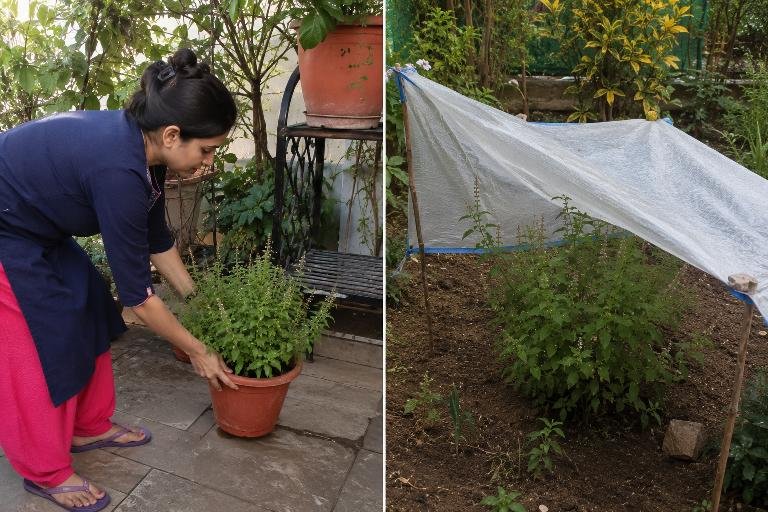
If your area experiences particularly cold nights, move a potted Tulsi plant to a warm, sheltered spot. If your Tulsi is planted directly in the ground, cover it with a cotton cloth or tarpaulin (tirpal) to protect it from the cold. Keep the plant away from cold drafts, strong winds and prolonged exposure to very low temperatures.
| Winter Care | What to Do |
|---|---|
| Sunlight | 4–6 hours of direct sunlight |
| Cold | Protect from very low temperatures |
| Wind | Keep away from strong cold winds |
| Rain | Avoid prolonged exposure to rain |
| Location | Choose a warm, sunny and sheltered spot |
Don’t Overwater Your Tulsi
One of the biggest mistakes during winter is watering Tulsi too frequently.
Because the soil dries more slowly in colder weather, always check the soil before watering. If the top layer still feels damp, wait before adding more water.
Too much moisture can lead to root problems and yellowing leaves.
Keep the Soil Well Drained
Your Tulsi pot should have proper drainage holes. The soil should remain slightly moist but should never stay waterlogged.
A loose, well-draining potting mix can help prevent excess moisture around the roots.
Remove Yellow and Damaged Leaves
Check your plant regularly and remove yellow, dry, or damaged leaves. This keeps the plant looking healthier and allows you to notice problems early.
If several leaves suddenly turn yellow, check the soil moisture and sunlight before increasing watering.
Should You Fertilize Tulsi in Winter?
Tulsi generally doesn’t need heavy feeding during colder periods. If the plant’s growth has slowed significantly, avoid using large amounts of fertilizer.
Focus instead on sunlight, appropriate watering, and protection from cold weather.
Simple Winter Tulsi Care Routine
| Time | What to Check |
|---|---|
| Morning | Give the plant sunlight and check the soil |
| Afternoon | Keep it in a warm, sunny location |
| Evening | Protect it from cold winds and very low temperatures, keep it in a shade. |
| Weekly | Remove damaged leaves and inspect the plant |
Final Tips for Healthy Tulsi in Winter
Taking care of Tulsi during winter is mostly about avoiding extremes. Give it enough sunlight, water only when needed, and protect it from harsh cold and excess moisture.
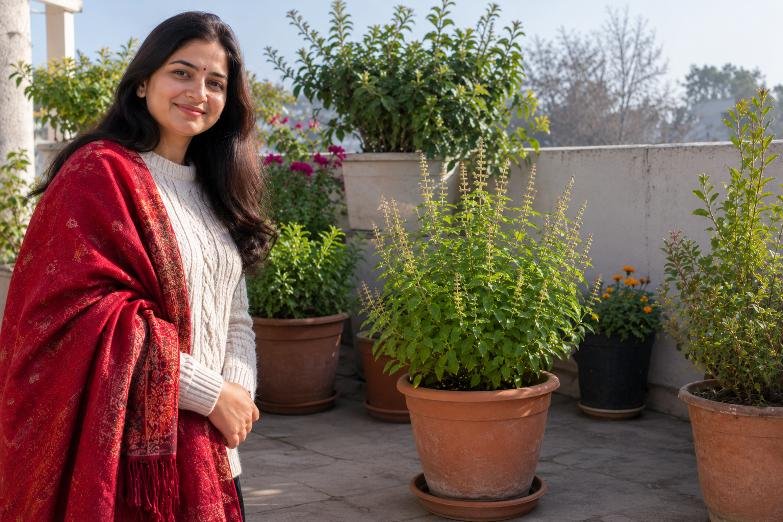
With these simple winter Tulsi care tips, your plant can remain healthy throughout the colder months and be ready for stronger growth when temperatures rise.
Remember: more water isn’t always better. In winter, sunlight, warmth, and good drainage are just as important as watering.