
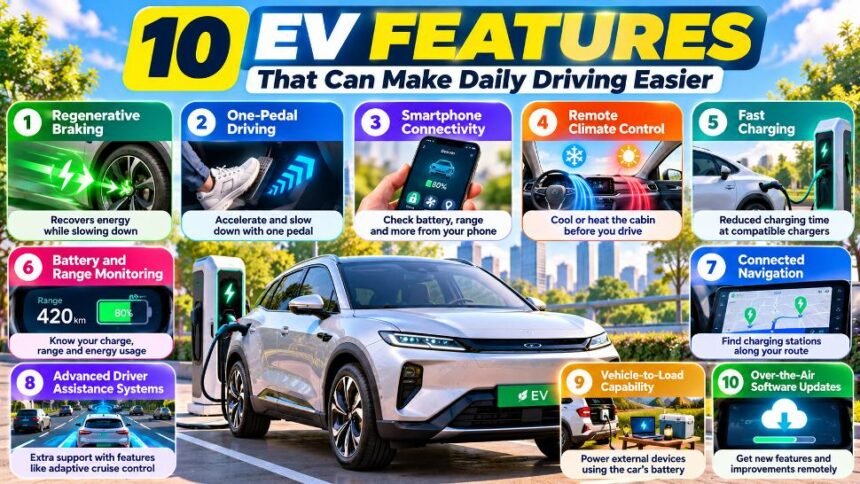
Electric vehicles are becoming increasingly common on Indian roads, and modern EVs offer much more than an electric motor and battery. Many models now come with features designed to make everyday driving more convenient, comfortable and efficient.
- 1. Regenerative Braking
- 2. One-Pedal Driving
- 3. Smartphone Connectivity
- 4. Remote Climate Control
- 5. Fast Charging
- 6. Battery and Range Monitoring
- 7. Connected Navigation
- 8. Advanced Driver Assistance Systems
- 9. Vehicle-to-Load Capability
- 10. Over-the-Air Software Updates
- EVs Are Becoming More Than Just Electric Cars
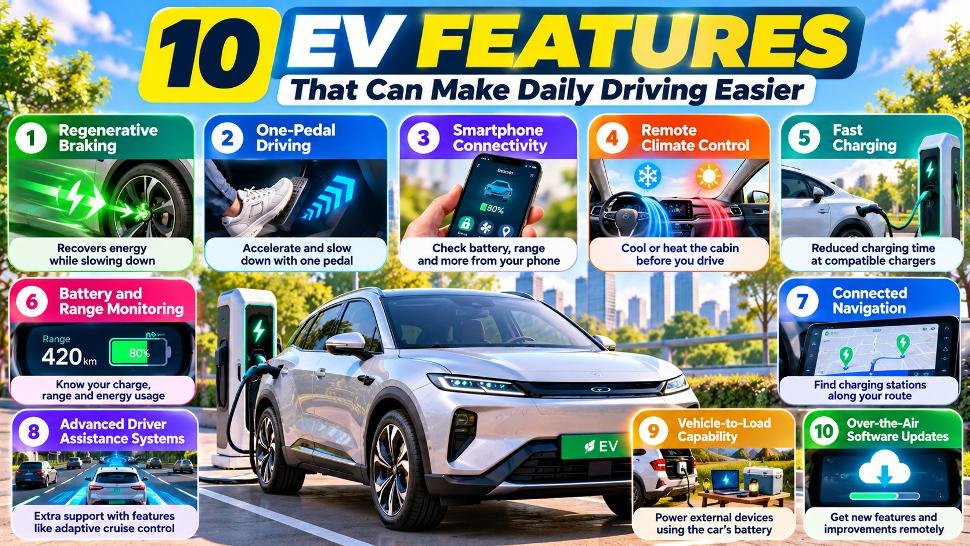
From smartphone connectivity to regenerative braking, here are 10 EV features that can make daily driving easier.
1. Regenerative Braking
Regenerative braking allows an EV to recover some energy when the vehicle slows down. Instead of wasting all the kinetic energy as heat through the brakes, the system can send some of that energy back to the battery.
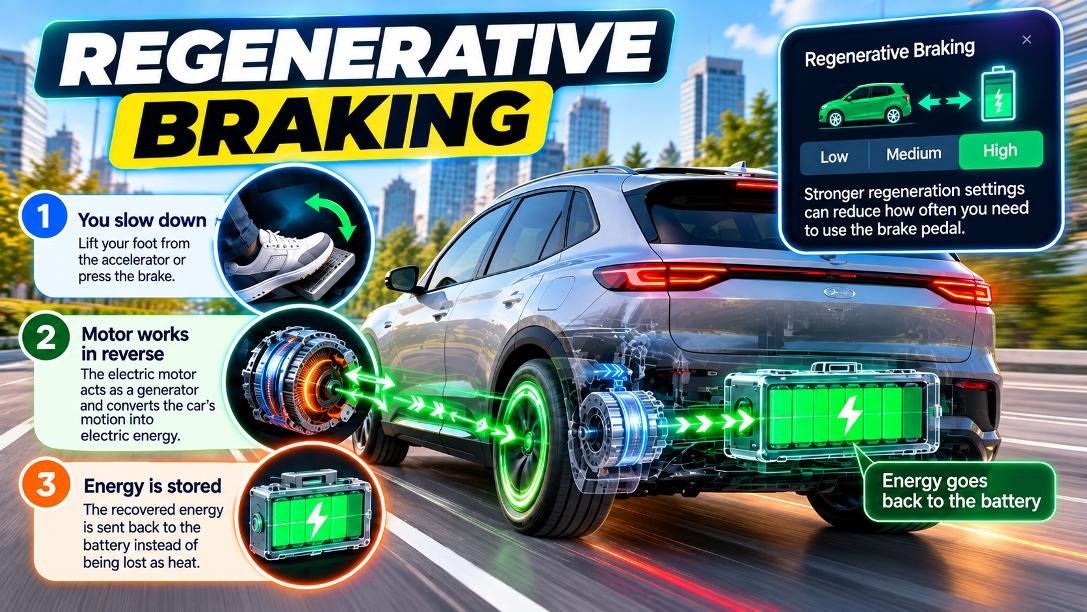
Drivers can also use stronger regeneration settings to reduce how often they need to use the brake pedal in certain driving conditions.
2. One-Pedal Driving
Some EVs offer one-pedal driving, allowing drivers to accelerate and slow down primarily using the accelerator pedal.
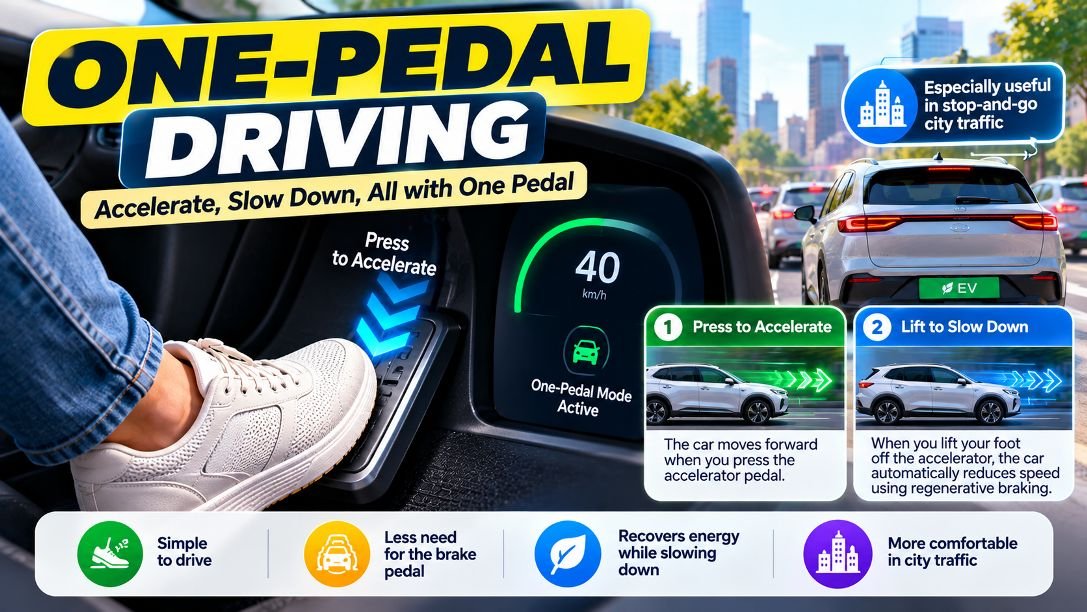
When the driver lifts off the accelerator, the vehicle automatically reduces speed through regenerative braking. This can be particularly useful in stop-and-go city traffic.
3. Smartphone Connectivity
Modern EVs often connect with smartphone apps that let owners check useful information remotely.
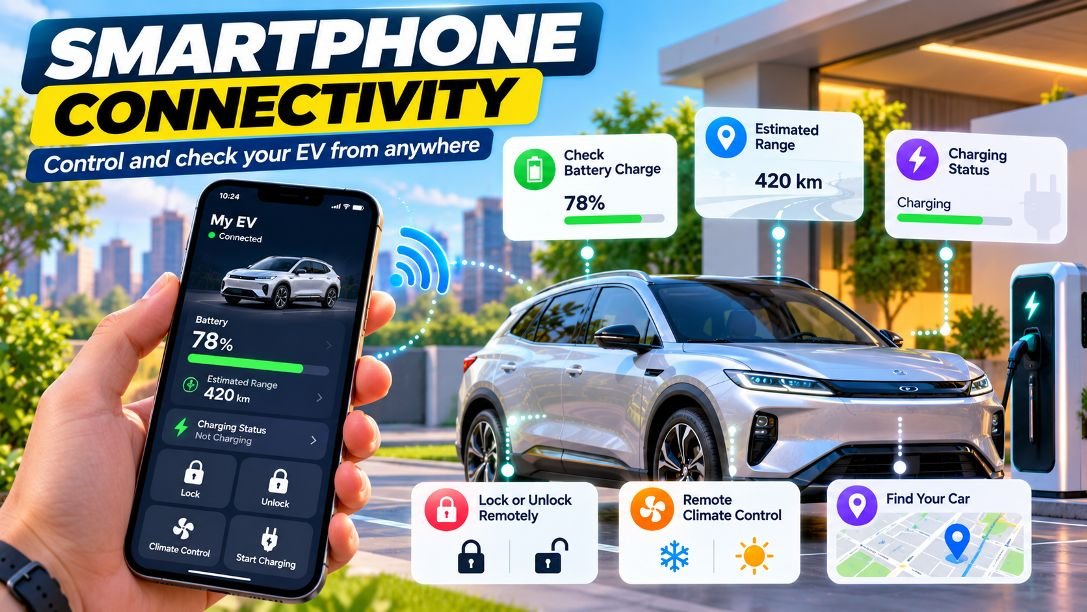
Depending on the vehicle, the app may show battery charge, estimated range and charging status. Some systems can also allow owners to lock or unlock the vehicle remotely.
4. Remote Climate Control
Remote climate control can be useful when an EV is parked and charging.
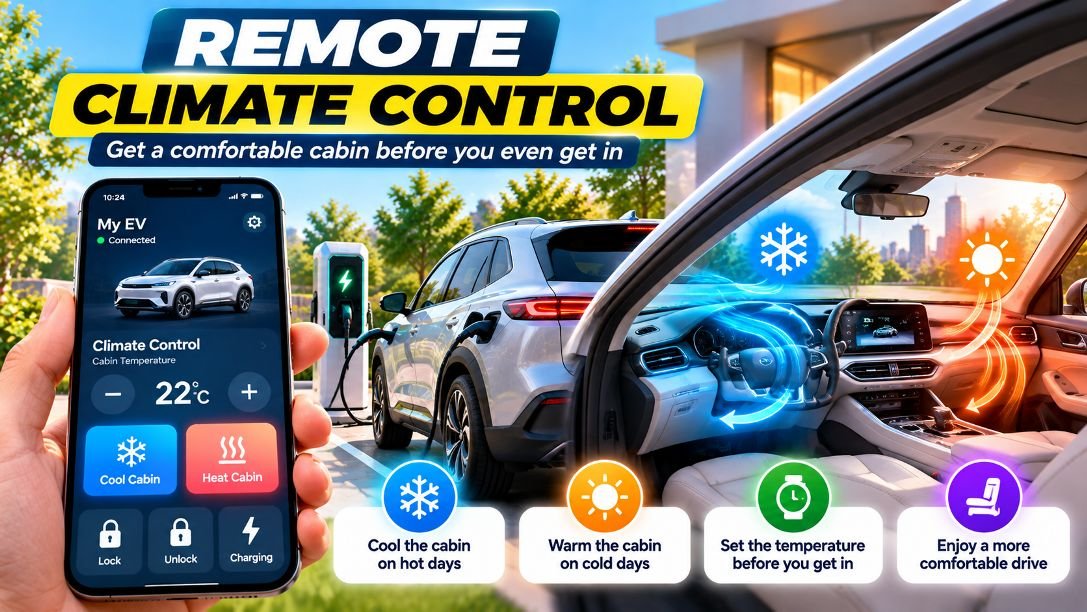
Depending on the model, owners can start cooling or heating the cabin through a smartphone app before getting into the car. This can make the vehicle more comfortable without having to wait for the cabin temperature to change after starting the journey.
5. Fast Charging
Fast-charging capability can reduce the amount of time an EV needs to spend at a compatible charging station.
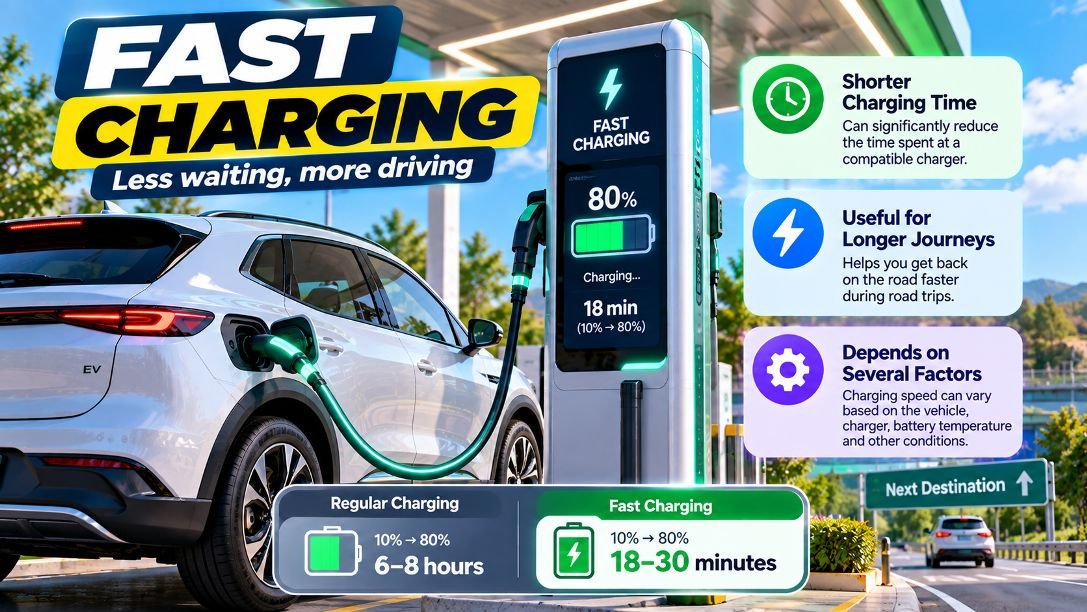
The actual charging speed depends on the vehicle, charger, battery temperature and other conditions, but the feature can be particularly useful during longer journeys.
6. Battery and Range Monitoring
EVs provide detailed information about battery charge and estimated driving range.
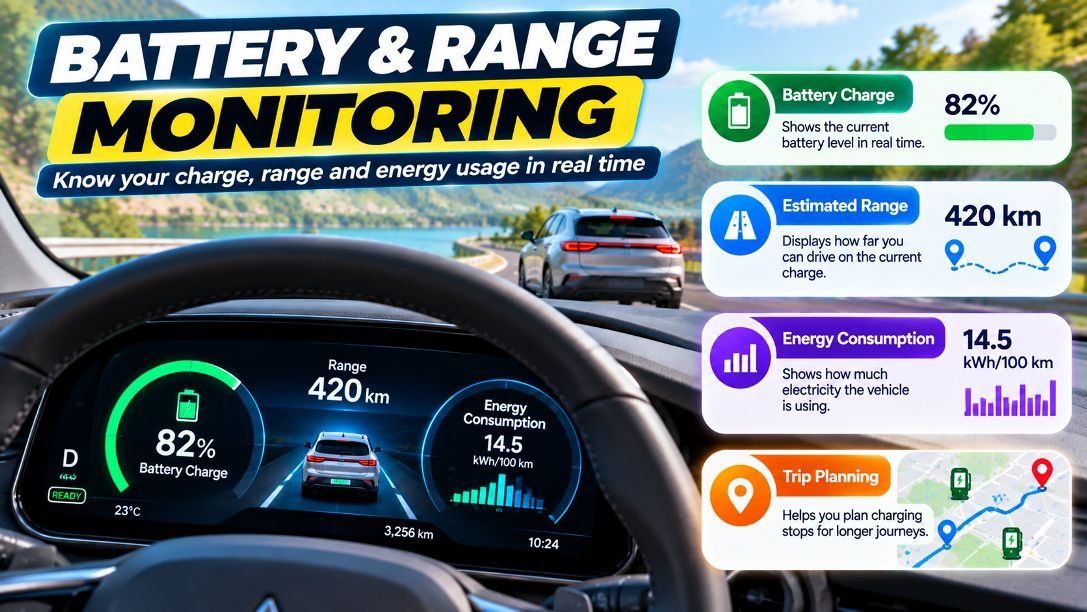
Some vehicles can also show energy consumption and provide range estimates based on recent driving conditions. This can help drivers plan charging stops and manage longer trips.
7. Connected Navigation
Connected navigation systems can do more than simply provide directions.
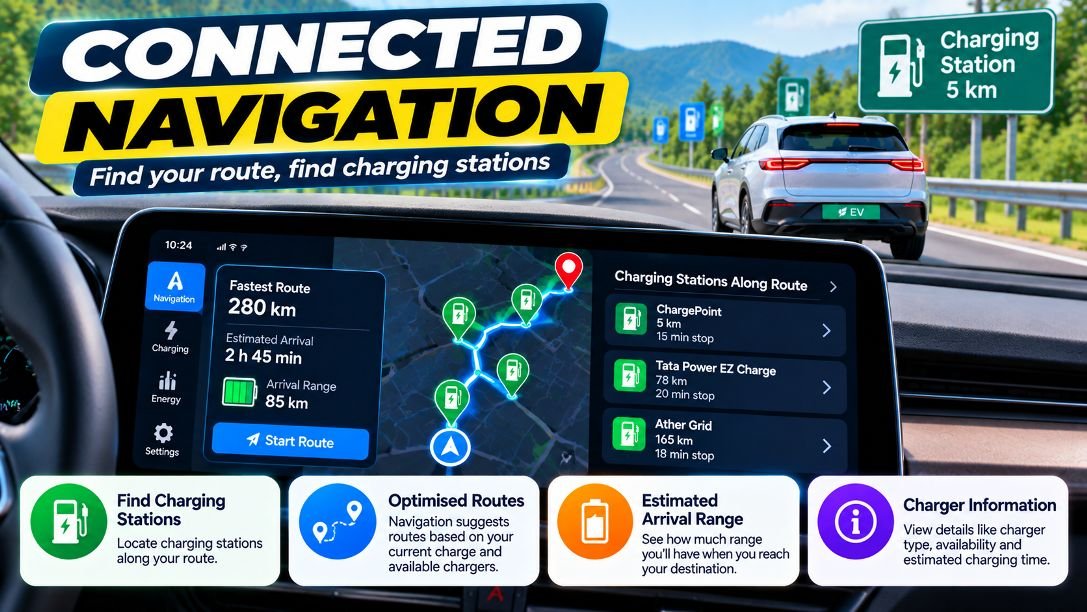
Some EVs can use navigation information to help drivers locate charging stations along a route. Depending on the vehicle and software, the system may also provide information about charging locations and estimated arrival range.
8. Advanced Driver Assistance Systems
Many newer EVs are available with features such as adaptive cruise control, lane-keeping assistance, blind-spot monitoring and automatic emergency braking.
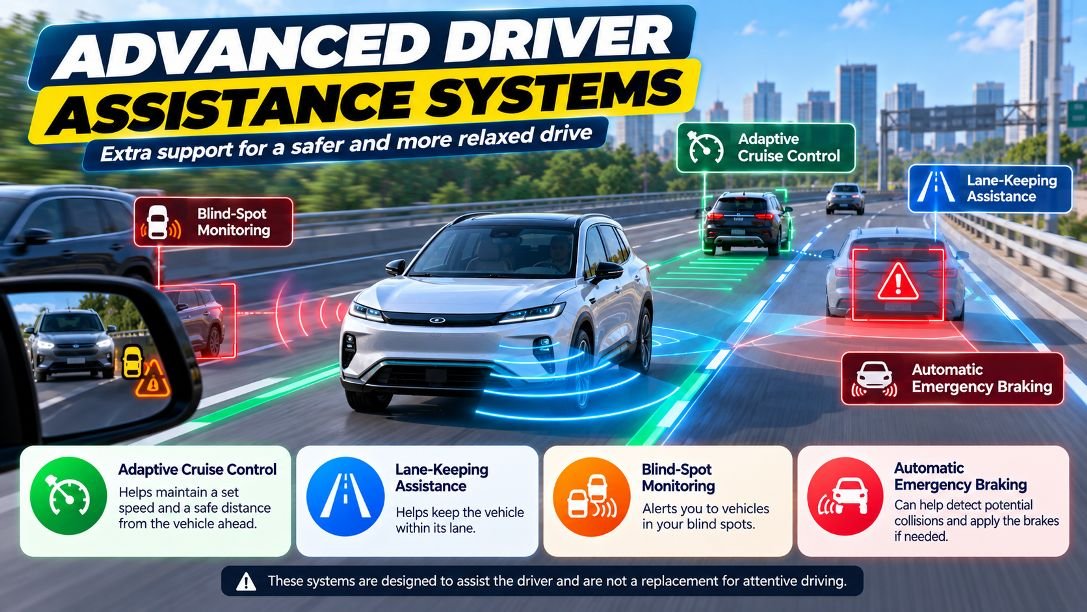
These systems are designed to assist the driver and can reduce the workload during certain driving situations. However, they are not a replacement for attentive driving.
9. Vehicle-to-Load Capability
Some EVs support vehicle-to-load technology, which allows the car’s battery to provide electricity to compatible external devices.
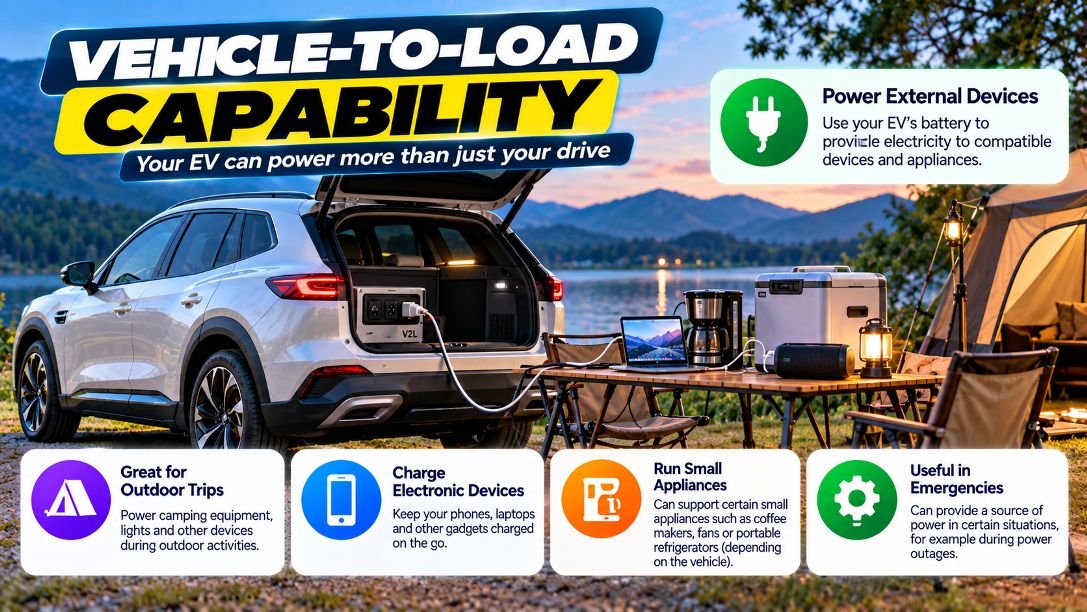
This can be useful for powering equipment during outdoor trips, charging electronic devices or running certain small appliances, depending on the vehicle’s specifications.
10. Over-the-Air Software Updates
Some modern EVs can receive software updates remotely.
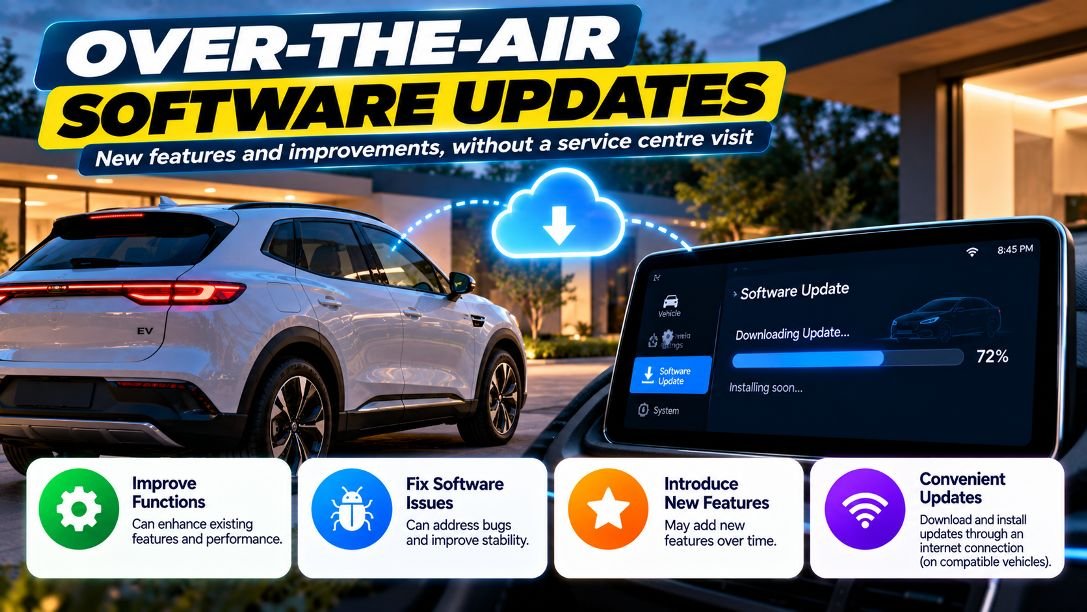
Instead of requiring every update to be installed at a service centre, compatible vehicles can download certain updates through an internet connection. Depending on the manufacturer, updates can improve existing functions, fix software issues or introduce new features.
EVs Are Becoming More Than Just Electric Cars
Today’s electric vehicles increasingly combine their electric powertrains with connected technology, driver-assistance systems and software-based features.
For everyday drivers, features such as regenerative braking, remote climate control, smartphone connectivity and charging navigation can make regular journeys simpler and more convenient.
As EV technology continues to develop, software and connected features are likely to become an increasingly important part of the overall driving experience.