

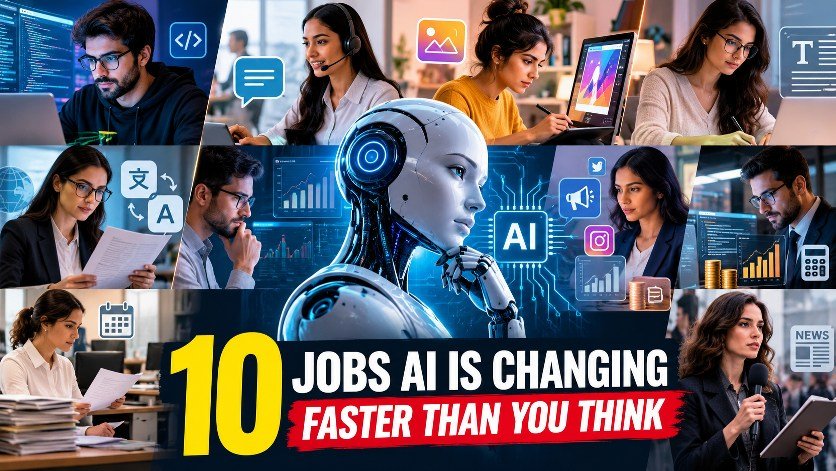
Artificial Intelligence is no longer limited to chatbots and image generators. AI tools are increasingly being used inside offices, software companies, media organizations, financial services and other workplaces, changing how people perform everyday tasks.
- 1. Software Developers
- 2. Customer Support Representatives
- 3. Graphic Designers
- 4. Content Writers
- 5. Translators
- 6. Data Analysts
- 7. Marketing Professionals
- 8. Financial and Accounting Professionals
- 9. Administrative and Clerical Workers
- 10. Journalists and Editors
- AI Is Changing Jobs, Not Simply Eliminating Them
- The Bigger Picture
A 2026 ILO report says AI adoption is reshaping workplace skills, with growing demand for digital, AI, cognitive and socioemotional skills. The OECD similarly finds that highly skilled occupations can have high AI exposure, although exposure does not automatically mean that a job will be automated.
Here are 10 types of jobs where AI is already changing the nature of work.
1. Software Developers
Software development is one of the clearest examples of AI changing an established profession.
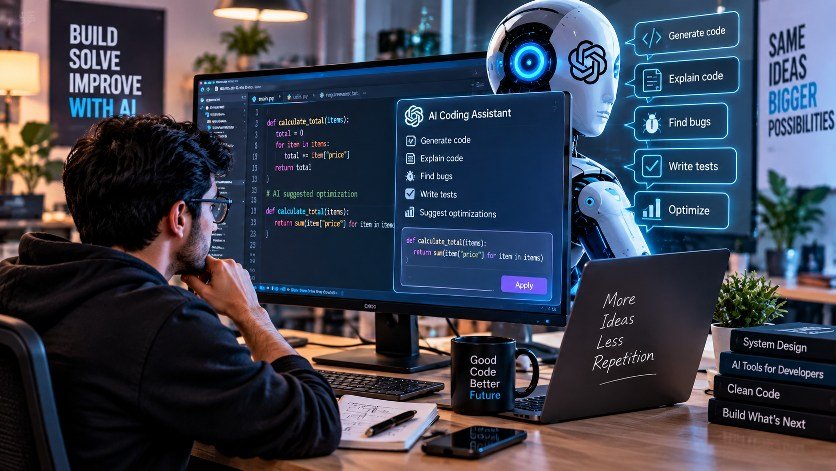
AI coding assistants can help developers generate code, explain existing code, find bugs, write tests and handle repetitive programming tasks. This is shifting some developers’ focus toward architecture, problem-solving, reviewing AI-generated code and integrating different systems.
The World Economic Forum reported in January 2026 that many developers were already seeing their roles change, with developers increasingly moving toward higher-level work rather than simply writing code line by line.
2. Customer Support Representatives
Customer service is another area where AI is changing everyday work.

AI-powered chatbots and voice systems can answer routine questions, retrieve information and handle basic customer requests. Human representatives can then concentrate on more complicated complaints and cases that require judgement or empathy.
This doesn’t necessarily mean customer-service jobs disappear. Instead, the mix of tasks performed by workers can change as companies automate repetitive interactions.
3. Graphic Designers
Generative AI has significantly changed image creation.
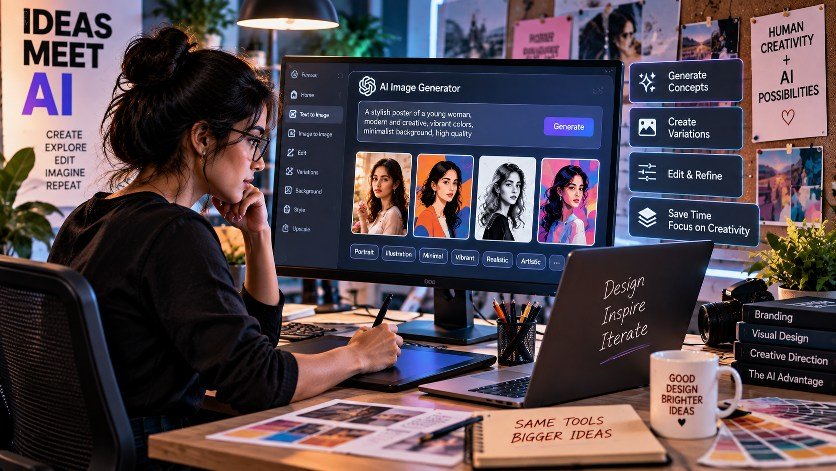
Workers can now use AI tools to generate concepts, backgrounds, illustrations and design variations from text prompts. Designers can therefore spend less time on some repetitive production work and more time on creative direction, editing, branding and client requirements.
The ILO’s 2025 assessment specifically noted that advances in image, video and voice generation have increased GenAI exposure in several media-related occupations.
4. Content Writers
Writing is another profession being reshaped by generative AI.
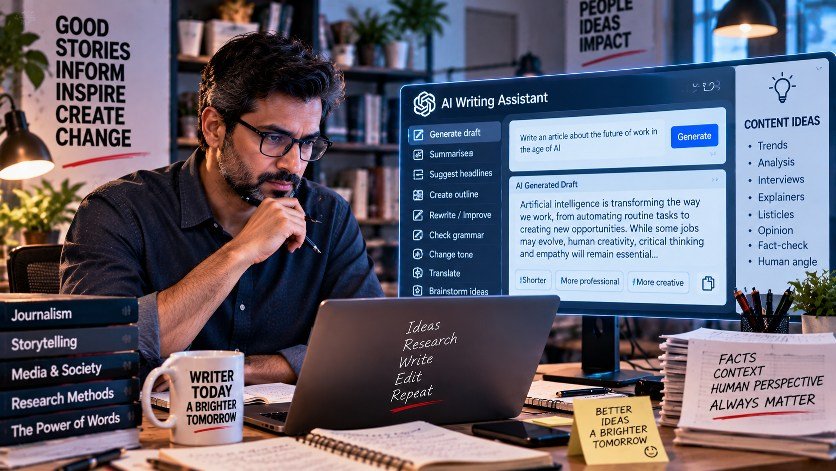
AI can create first drafts, summaries, headlines, outlines and variations of existing content within seconds. Human writers increasingly need to focus on original reporting, fact-checking, expertise, editing, storytelling and providing information that AI cannot independently verify.
The change is particularly significant because language-generation systems directly affect tasks that previously required substantial time from writers and editors.
5. Translators
AI translation tools have become increasingly capable of handling large amounts of text quickly.

For routine translations, AI can provide an initial version that a human translator then reviews and corrects. Human expertise remains particularly important for legal, technical, literary and culturally sensitive material where context and precise meaning matter.
This is a good example of AI changing a workflow rather than simply replacing an occupation.
6. Data Analysts
AI can now assist with tasks such as cleaning datasets, identifying patterns, generating summaries and creating visualizations.
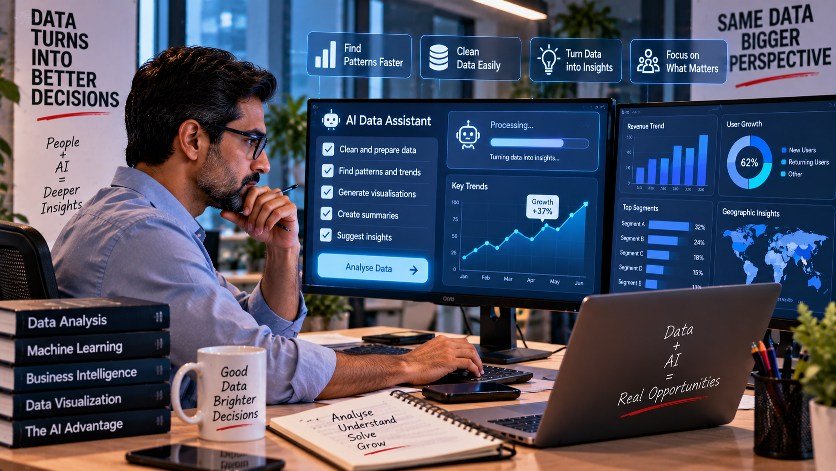
Instead of spending all their time preparing data, analysts can increasingly use AI to accelerate repetitive work and spend more time interpreting results and explaining what the numbers mean.
The OECD notes that AI exposure is particularly high in occupations involving information processing and other cognitive tasks.
7. Marketing Professionals
Marketing teams are using AI for content ideas, audience analysis, advertising variations, campaign planning and customer segmentation.

A marketer can generate multiple versions of an advertisement or social-media post much faster than before. However, deciding which message fits a brand and understanding customers still requires human judgement.
The OECD identifies marketing and other knowledge-intensive services among sectors with substantial AI exposure.
8. Financial and Accounting Professionals
AI is also changing work involving financial information.
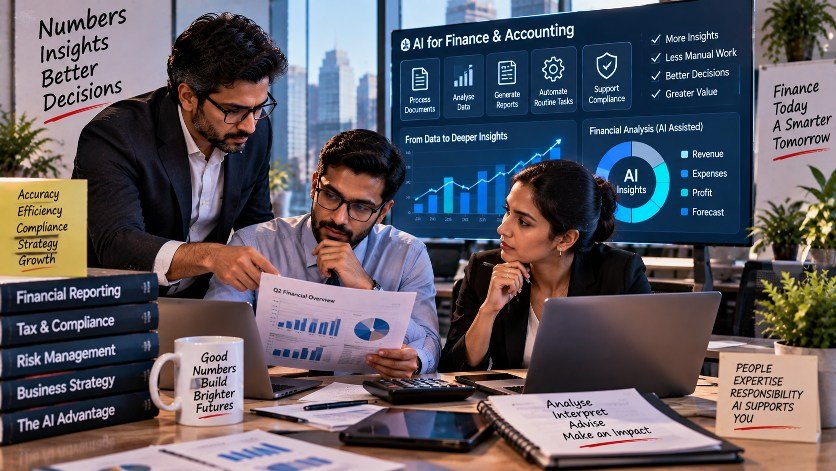
Tasks involving document processing, data analysis, reporting and routine administrative work can increasingly be assisted by AI systems.
This doesn’t eliminate the need for accountants or financial professionals. Instead, it can shift their time toward interpretation, compliance, strategic advice and decisions requiring professional responsibility.
The OECD identifies finance and insurance among sectors with relatively high AI exposure.
9. Administrative and Clerical Workers
Administrative work is one of the areas most directly exposed to generative AI.
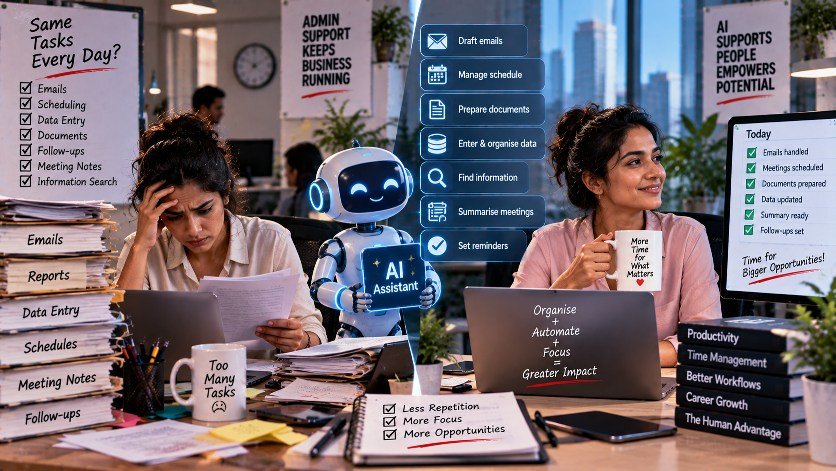
AI systems can assist with emails, scheduling, document preparation, data entry, summaries and information retrieval.
The ILO’s 2025 global index found that clerical occupations continue to have the highest levels of GenAI exposure.
That makes administrative work one of the clearest examples of how AI can alter the tasks associated with a job.
10. Journalists and Editors
Newsrooms are also experimenting with AI for tasks such as transcription, summaries, headline suggestions, research assistance and translation.
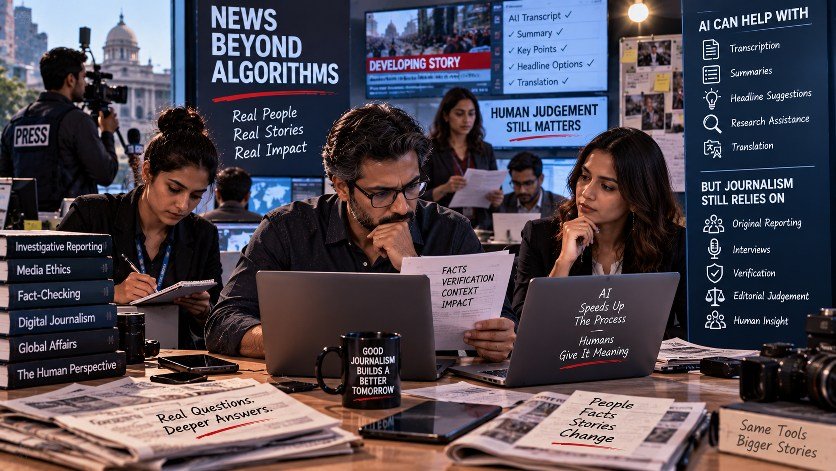
For journalists, however, some of the most important parts of the job—finding original information, interviewing people, verifying claims and making editorial decisions—still depend heavily on human work.
This means AI can accelerate parts of the reporting process while simultaneously increasing the importance of verification and editorial judgement.
AI Is Changing Jobs, Not Simply Eliminating Them
The biggest takeaway from current research is more nuanced than the idea that AI will simply “take people’s jobs.”
The ILO estimates that one in four workers worldwide are in occupations with some exposure to GenAI, but says transformation is more likely than outright replacement for most jobs.
The OECD similarly distinguishes AI exposure from automation risk. Jobs involving sophisticated cognitive work can have high exposure to AI while still requiring human judgement, responsibility and interpersonal skills.
At the same time, the ILO’s 2026 research says AI adoption is increasing the importance of AI literacy, digital skills, adaptability and higher-order cognitive and socioemotional abilities.
The Bigger Picture
AI is therefore changing the question from “Will AI replace this job?” to “Which parts of this job will AI change?”
For workers, that distinction matters. A profession may remain in demand while the skills needed to perform it change significantly.
And that is probably the stronger Nation News angle: AI isn’t just creating new jobs—it is quietly rewriting what millions of existing jobs actually involve.