
Robots are no longer limited to factories and warehouses. Advances in artificial intelligence, computer vision, sensors, and humanoid robotics are making it possible for robots to work in environments designed for humans.
- 1. Robots Could Handle Household Chores
- 2. Robots Could Help Older People
- 3. Robots Could Transform Healthcare
- 4. Robots Could Deliver Food and Packages
- 5. Robots Could Work Alongside Humans
- 6. Robots Could Improve Disaster Response
- 7. Robots Could Change Transportation
- 8. Robots Could Transform Agriculture
- 9. Robots Could Become Personal Assistants
- 10. Humanoid Robots Could Enter Everyday Spaces
- The Bigger Picture
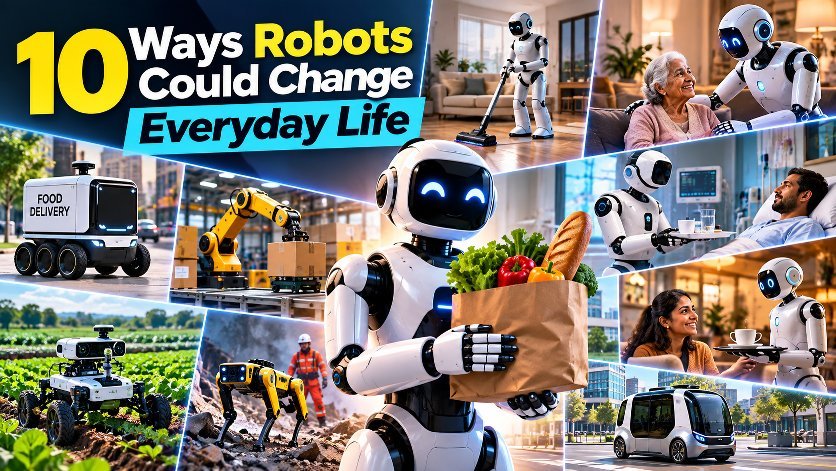
From household chores to healthcare and delivery, here are 10 ways robots could become part of everyday life.
1. Robots Could Handle Household Chores
One of the most obvious uses could be at home.
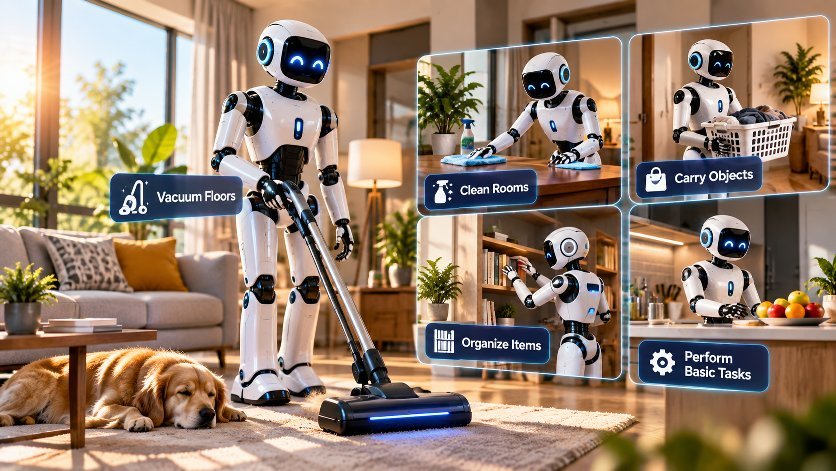
Future robots could potentially vacuum floors, clean rooms, carry objects, organize items and perform basic household tasks.
Instead of buying separate devices for individual chores, a general-purpose home robot could eventually handle several tasks using the same hardware.
2. Robots Could Help Older People
Robots could become useful assistants for elderly people who need help with everyday activities.
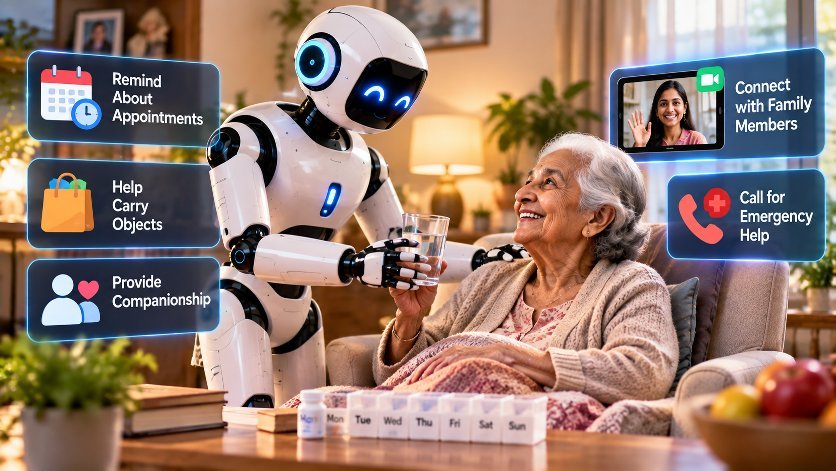
They could potentially remind users about appointments, help carry objects, provide companionship and call family members or emergency services when necessary.
This could become increasingly important as populations age in many countries.
3. Robots Could Transform Healthcare
Hospitals already use robots for certain medical and logistical tasks.
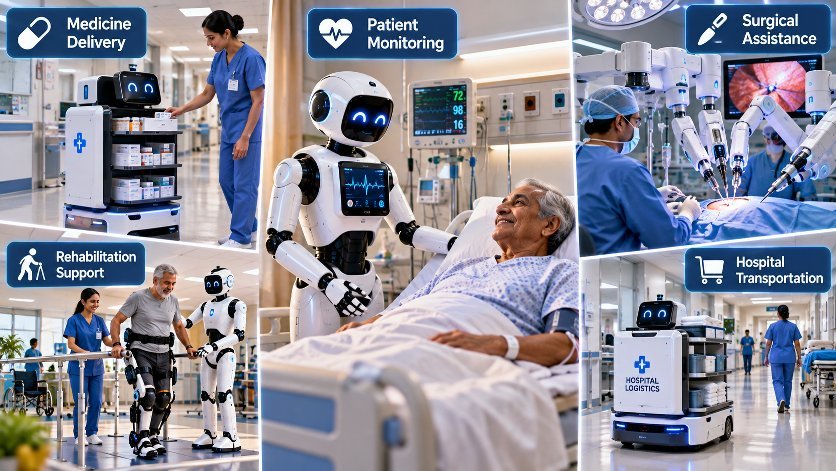
Future systems could assist with medicine delivery, patient monitoring, rehabilitation and hospital transportation.
Surgical robots could also become more capable as AI and robotics technology continue developing, although medical applications will require extensive testing and regulatory approval.
4. Robots Could Deliver Food and Packages
Delivery robots are already being tested and deployed in some locations.
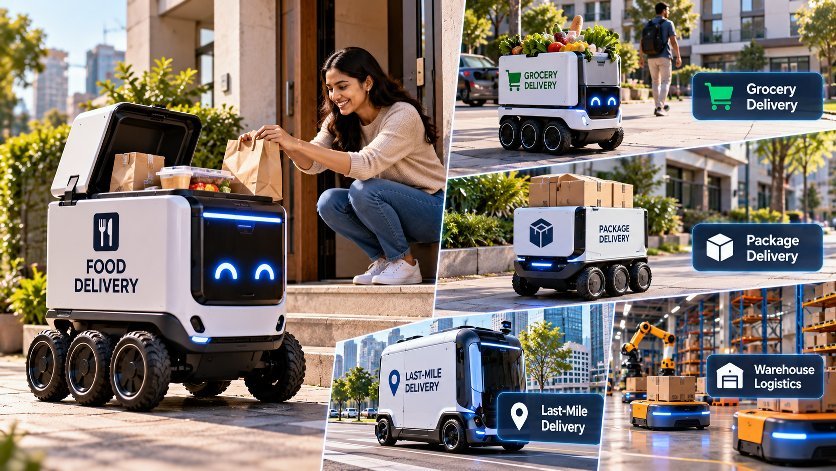
Small autonomous machines could transport food, groceries and packages over short distances, while larger autonomous systems could eventually support warehouses and last-mile delivery.
This could reduce the need for humans to perform repetitive transportation tasks.
5. Robots Could Work Alongside Humans
The future workplace may not necessarily be humans versus robots.
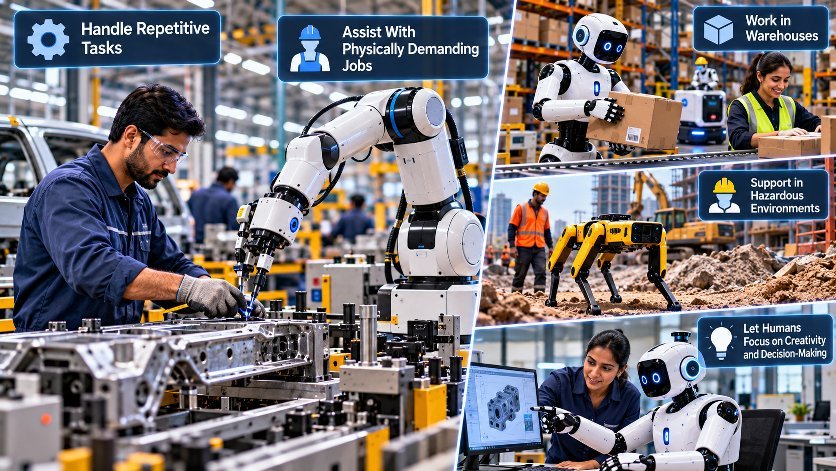
Instead, robots could handle repetitive, physically demanding or hazardous jobs, while humans focus on decision-making, creativity and customer interaction.
Factories, warehouses and construction sites could increasingly use robots as collaborative workers.
6. Robots Could Improve Disaster Response
Robots can operate in environments that may be dangerous for humans.
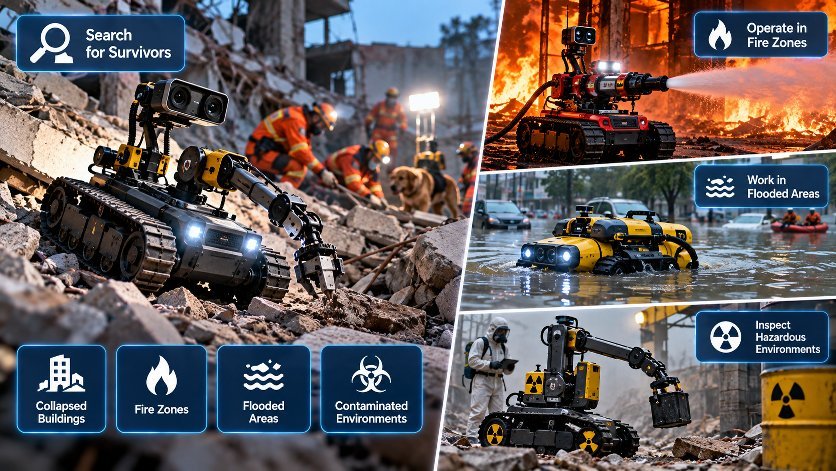
Specialized robots could enter collapsed buildings, fire zones, flooded areas or contaminated environments to search for survivors, inspect structures or deliver equipment.
This could reduce the risk faced by emergency responders.
7. Robots Could Change Transportation
Autonomous robots are already being developed for transportation and logistics.
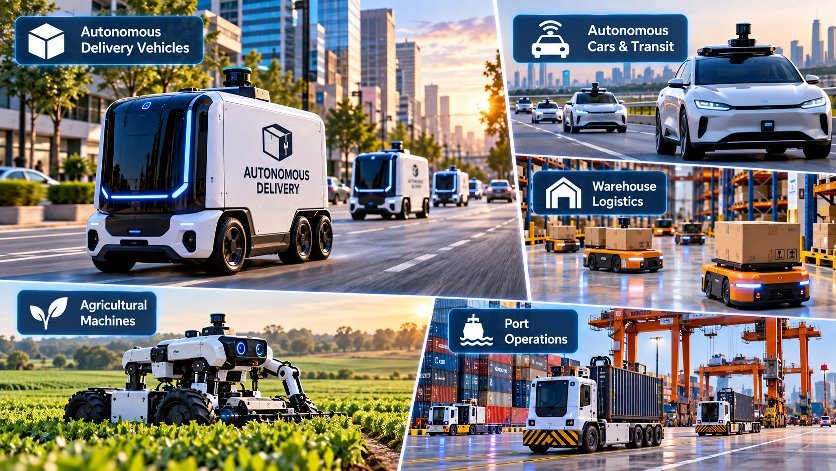
Future systems could include autonomous delivery vehicles, warehouse robots, agricultural machines and eventually more advanced autonomous transportation systems.
Robots could also help move goods inside ports, factories and distribution centers.
8. Robots Could Transform Agriculture
Agriculture is another area where robotics could make a major difference.
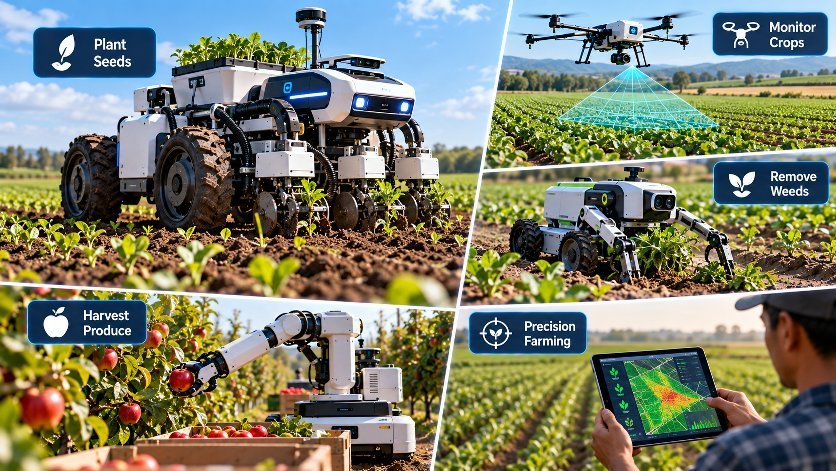
Robots could potentially plant seeds, monitor crops, remove weeds, harvest produce and inspect fields using cameras and AI.
Precision robotics could allow farmers to target individual plants rather than treating an entire field in the same way.
9. Robots Could Become Personal Assistants
Today’s digital assistants mainly live inside phones and speakers.
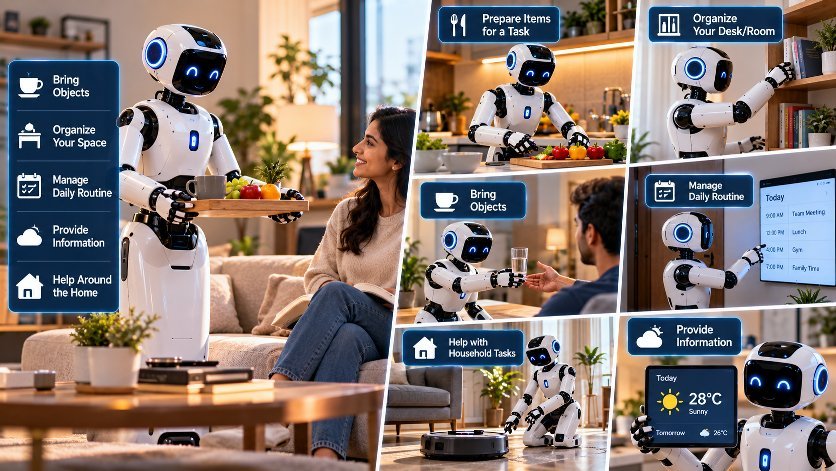
Future AI-powered robots could potentially interact with the physical world.
Instead of simply telling you the weather, a physical assistant could bring an object, organize your desk, prepare items for a task or help manage your daily routine.
This is where AI agents and robotics could increasingly converge.
10. Humanoid Robots Could Enter Everyday Spaces
Humanoid robots are attracting significant attention because their body shape is designed to operate in environments built for humans.
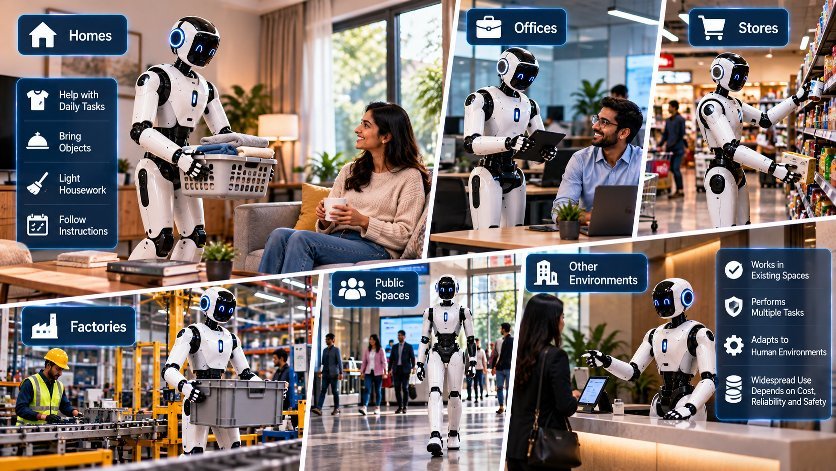
A robot capable of walking, manipulating objects and understanding spoken instructions could potentially work in homes, offices, stores, factories and other existing environments without requiring every location to be redesigned.
However, widespread household humanoid robots will depend on factors such as cost, reliability, safety and battery technology.
The Bigger Picture
The biggest change may not be that robots completely replace humans. Instead, robots could gradually take over repetitive, dangerous and physically demanding tasks.
Combined with AI, robots are becoming capable of understanding instructions, recognizing objects and adapting to different situations.
The result could be a future where robots become another layer of everyday technology—similar to how smartphones and computers became essential parts of modern life.