

Coal stocks at thermal power plants across India have fallen to less than half of the prescribed requirement, amid high electricity demand and disruptions in coal supplies caused by the monsoon season.
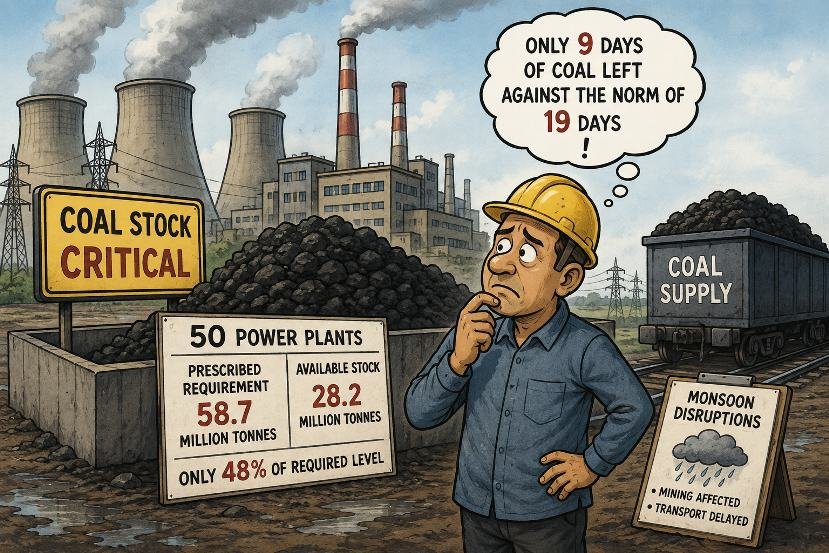
According to data from the Central Electricity Authority (CEA), coal inventories at 50 power plants had reached a critical level as of September 2. Together, these plants have a generation capacity of around 224 GW.
The plants had about 28.2 million tonnes of coal in stock as of Wednesday, against a prescribed requirement of 58.7 million tonnes. This means their available inventory stood at just 48% of the required level.
At an assumed plant load factor (PLF) of 85%, the available coal is estimated to cover roughly nine days of generation, compared with the normal requirement of at least 19 days of backup.
50 Power Plants Face Critical Coal Stock Levels
Under CEA guidelines, a thermal power plant is classified as critical when its coal inventory falls below 25% of the prescribed stock requirement.
Of the 50 plants currently facing critical stock levels:
- 45 plants depend on domestic coal
- 4 plants use imported coal
- 1 plant relies on coal washery rejects
Officials from the Ministry of Coal said all vulnerable plants are being monitored daily by an inter-ministerial team. Coal supplies are also being prioritised and dispatched continuously to plants facing shortages.
A senior ministry official said that being classified as a critical plant under CEA norms is part of the routine monitoring mechanism. The classification does not necessarily mean that a plant is running out of coal, but indicates that it requires closer monitoring and priority action.
Monsoon Disruptions Affect Coal Supply
Coal consumption at thermal power plants is another factor being closely monitored. At an 85% PLF, the standard coal requirement is estimated at around 3.1 million tonnes per day. However, actual daily consumption is currently around 2.4 million tonnes.
Coal supplies traditionally face disruptions during the monsoon season as heavy rainfall can affect mining operations as well as transportation from coal-producing regions to power plants.
The situation generally begins to improve as rainfall declines in September, allowing mining and transportation operations to gradually return to normal levels.
Some Power Plants Asked to Delay Maintenance
Although the Ministry of Power has not issued an official statement on the matter, sources cited in reports said some coal-fired power plants have been asked to postpone scheduled maintenance activities.
The move is aimed at ensuring that sufficient generating capacity remains available during a period of high electricity demand and tight coal inventories.
Authorities are continuing to monitor coal availability at vulnerable plants while prioritising supplies to minimise the risk of disruptions to power generation.