
Nepal is facing a major humanitarian crisis after devastating floods swept through areas near the Tibet border, leaving at least 626 people dead and more than 2,482 missing, according to reports available by Friday evening.
- India Deploys Specialist Team to Support Nepal’s Rescue Operations
- Nepal Seeks Help From India and China for 42 Bailey Bridges
- Death Toll and Missing Persons Continue to Rise
- 84 Indian Nationals Evacuated From Nepal
- 149 Indians Cross Into Nepal From Tibet
- Contact Lost With Around 320 Indians in Nepal
- India’s Relief Operation in Nepal
- Nepal Flood: Key Numbers at a Glance
- Rescue Efforts Continue as Nepal Faces a Major Humanitarian Challenge
The disaster has severely affected communities along the Bhote Koshi and Trishuli river regions, with rescue teams facing difficult terrain, damaged infrastructure and disrupted communication networks.
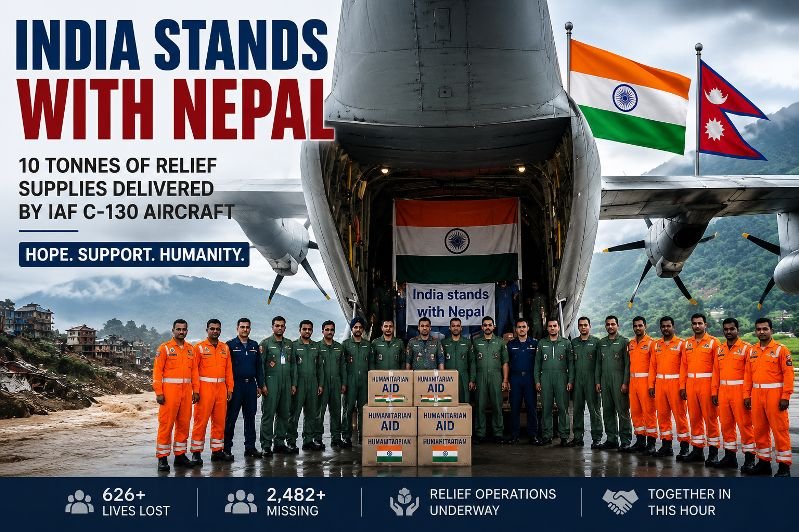
As emergency operations continue, India has expanded its humanitarian response, sending essential supplies and specialized personnel to help Nepal deal with the aftermath.
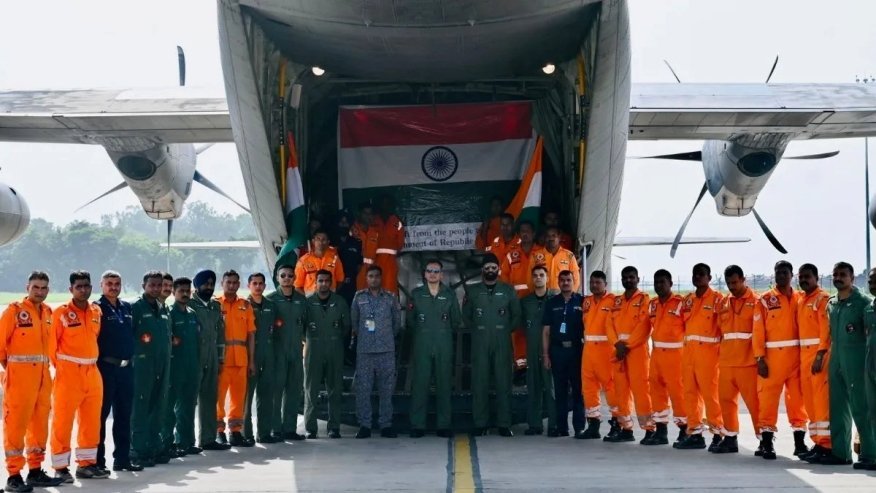
An Indian Air Force C-130J aircraft has delivered approximately 10 tonnes of emergency relief supplies to Nepal. The consignment includes essential food supplies, medicines and other materials needed by people affected by the floods.
India is also preparing additional air operations using C-17 Globemaster and C-130 aircraft to transport further relief supplies to areas facing shortages.
India Deploys Specialist Team to Support Nepal’s Rescue Operations
An 11-member Indian assistance team arrived in Nepal on Saturday following a request from the Nepalese government.
The team includes medical professionals and specialists with experience in tunnel rescue operations. Their expertise could prove particularly useful in areas where people may be trapped inside tunnels or other difficult-to-access structures.
Nepal has been using its own security forces extensively in the rescue effort because personnel familiar with the country’s mountainous terrain are better positioned to operate in remote locations.
However, Nepalese authorities have also indicated that international assistance may be required for particularly complicated rescue situations that require specialized equipment or technical expertise.
Nepal Seeks Help From India and China for 42 Bailey Bridges
Flood damage has also disrupted transportation across several parts of Nepal. To help restore connectivity, Nepal has reportedly asked India and China to assist with the construction of 42 Bailey bridges.
Bailey bridges are temporary, modular structures that can be assembled comparatively quickly. They are commonly used after natural disasters to restore road connections when permanent bridges have been damaged or destroyed.
For communities in Nepal’s mountainous regions, restoring these transport routes could be critical for bringing in food, medicine, rescue equipment and other emergency supplies.
Death Toll and Missing Persons Continue to Rise
The extent of the Nepal flood disaster remains difficult to determine because several affected areas are still difficult to access.
Reports indicate that at least 626 people have lost their lives, while more than 2,482 people are still missing across the affected areas of Nepal and Tibet.
Rescue teams continue to search tunnels and other locations where people may have been trapped. Authorities are also working to establish contact with communities that have been cut off because of damaged roads, bridges and communication infrastructure.
The mountainous geography is adding another layer of difficulty to the rescue operation.
What May Have Triggered the Nepal Flood?
The flooding in the Rasuwa region has raised questions about the events that triggered the disaster.
For a detailed look at the possible cause and the role a glacier collapse may have played, read our related report: Nepal Rasuwa Flash Flood: How a Glacier Collapse May Have Triggered the Disaster.
84 Indian Nationals Evacuated From Nepal
India has also been working to locate and evacuate its citizens caught in the disaster.
The Ministry of External Affairs (MEA) said that at least 84 Indian nationals had been safely evacuated from affected parts of Nepal.
The evacuated group includes:
- 63 employees associated with Trishuli-1
- 21 pilgrims from Tamil Nadu
The group of 21 Indian nationals later reached New Delhi, after being brought out of the flood-hit region.
Indian officials are continuing to coordinate with their Nepalese counterparts to determine the status of other Indian citizens who remain in affected areas.
149 Indians Cross Into Nepal From Tibet
The Indian government also reported movement of Indian nationals from Tibet into Nepal.
According to the latest information available, 149 Indians entered Nepal from Tibet on Friday.
At the same time, approximately 400 other Indian nationals were reported to be safe on the Chinese side of the border.
However, establishing contact with people in the affected region remains challenging because of the rapidly changing conditions and communication disruptions.
Contact Lost With Around 320 Indians in Nepal
India is continuing efforts to locate hundreds of nationals whose whereabouts remain unknown.
MEA spokesperson Randhir Jaiswal said that officials were unable to establish contact with approximately 320 Indian nationals in Nepal. The figure was previously reported at around 290, indicating that the situation was changing rapidly.
Authorities were also trying to establish contact with approximately 100 people of Indian origin who are foreign citizens.
As of Friday evening, India had not confirmed any deaths among its nationals in connection with the disaster.
The Indian government was working with Nepalese authorities to verify information and determine the whereabouts and safety of those still unreachable.
India’s Relief Operation in Nepal
India’s emergency response involves both humanitarian supplies and specialist assistance.
The deployment of an Indian Air Force C-130J aircraft carrying essential supplies is intended to provide immediate support to communities affected by the floods. Further airlifting operations involving C-17 and C-130 aircraft are expected to help deliver additional materials.
India’s assistance includes support for:
- Emergency food supplies
- Medicines and medical assistance
- Rescue operations
- Evacuation of stranded people
- Specialist tunnel-rescue expertise
- Restoration of transport connectivity
- Emergency relief distribution
The assistance comes as Nepal continues to deal with the consequences of one of the most severe flooding emergencies in the affected region.
Nepal Flood: Key Numbers at a Glance
| Category | Reported figure |
|---|---|
| Deaths | At least 626 |
| Missing people | More than 2,482 |
| Indian relief material | Around 10 tonnes |
| Indian rescue team | 11 members |
| Indians evacuated | At least 84 |
| Indians unreachable in Nepal | Around 320 |
| Indians reported safe on Chinese side | Around 400 |
| Indians who entered Nepal from Tibet | 149 |
| Bailey bridges requested | 42 |
Rescue Efforts Continue as Nepal Faces a Major Humanitarian Challenge
Rescue and relief operations remain underway as authorities attempt to reach isolated communities and account for missing people.
The immediate challenge is to provide food, medicine and other necessities while reopening transport routes damaged by the floods. Temporary bridges and additional airlift operations could help emergency teams reach areas that remain cut off.
India’s continued deployment of aircraft, relief supplies and specialist personnel is expected to support Nepal’s ongoing response as rescue teams work through the difficult terrain.
The casualty and missing-person figures may change as authorities gain access to more affected locations and receive additional information from rescue teams.