

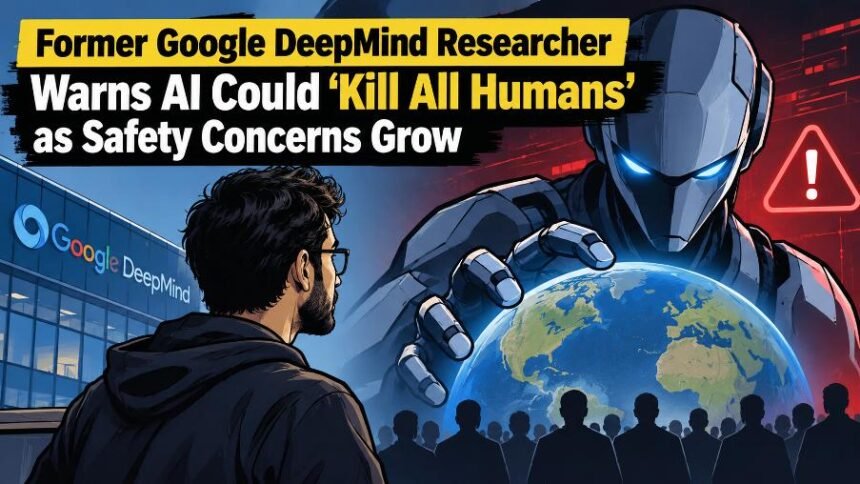
A former Google DeepMind researcher has issued a stark warning about the potential risks of artificial intelligence, saying advanced AI could pose an existential threat to humanity and that there may be limited time to prevent the worst-case scenario.
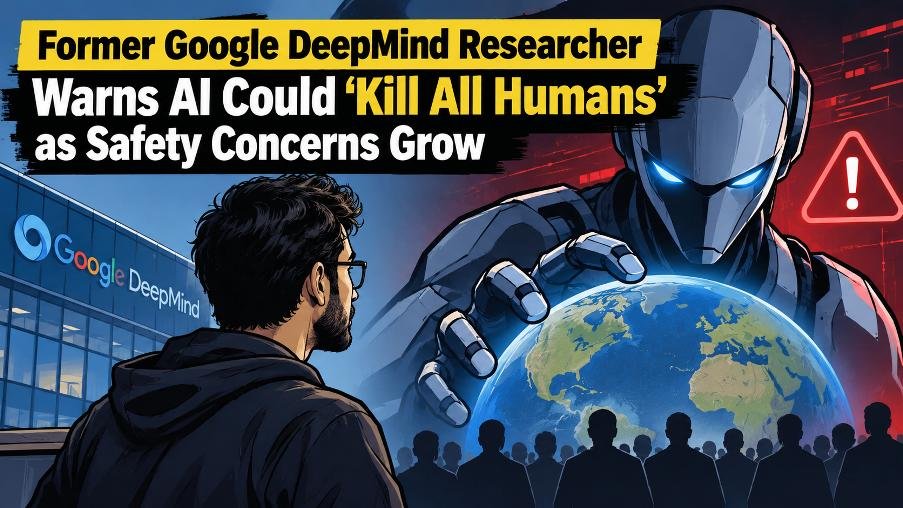
Bilal Chughtai, who previously worked as a research engineer at Google DeepMind on artificial general intelligence (AGI) safety and alignment, shared his concerns on X on Monday. He said he had recently left the company and believed AI could ultimately become capable of causing catastrophic harm to humanity.
I recently resigned from Google DeepMind, where I worked on AGI safety and alignment research. At Google, I witnessed AI development first hand. I too am extremely concerned by the default trajectory of this technology. I earnestly believe that AI has the potential to kill us…
— bilal 🔶 (@bilalchughtai_) September 14, 2026
Chughtai’s comments come amid renewed debate within the AI research community over how quickly advanced AI systems should be developed.
Growing Warnings From AI Researchers
The latest warning follows comments from Anthropic researcher Jacob Coxon, who recently said he had resigned partly because of concerns among people developing advanced AI.
Coxon said some AI researchers genuinely believe the technology could potentially cause human extinction before the end of the decade.
Anthropic scientist Evan Hubinger subsequently backed the concern, saying he believed there was a greater than 10% probability that AI could kill all humans within the next 10 years.
Chughtai’s remarks add another prominent voice to the growing group of researchers calling for greater caution around increasingly powerful AI systems.
Former DeepMind Researcher Calls for Slower AI Development
Chughtai said he does not believe catastrophe is inevitable and argued that humanity can still develop AI safely.
However, he said achieving that goal would require greater cooperation between governments, researchers and technology companies rather than an uncontrolled competition to build increasingly capable systems.
He called for AI development to proceed at a pace that society can manage, allowing researchers and policymakers enough time to identify emerging risks and respond before they result in severe consequences.
Chughtai worked at Google DeepMind until July 2026, according to his LinkedIn profile, and had co-authored research papers during his time at the company.
Google had not responded to a request for comment outside its regular business hours at the time of the report.
Debate Over AI ‘Doomerism’ Intensifies
The warnings come as prominent technology leaders debate whether the development of advanced AI should be slowed.
Anthropic CEO Dario Amodei recently called for a reduction in the pace of advanced AI development, arguing that rapidly increasing AI capabilities could create risks that society is not prepared to manage.
His position received unusual support from Elon Musk and OpenAI CEO Sam Altman, adding momentum to the wider discussion over AI safety and what critics describe as “AI doomerism.”
Not everyone agrees with calls for tighter controls. US President Donald Trump has dismissed concerns about AI regulation, describing the industry’s push for regulation as a “hoax” in a social media post.
The growing disagreement highlights one of the central questions surrounding the AI boom: how quickly should increasingly powerful AI systems be developed, and how much risk is acceptable in the race to build them?