

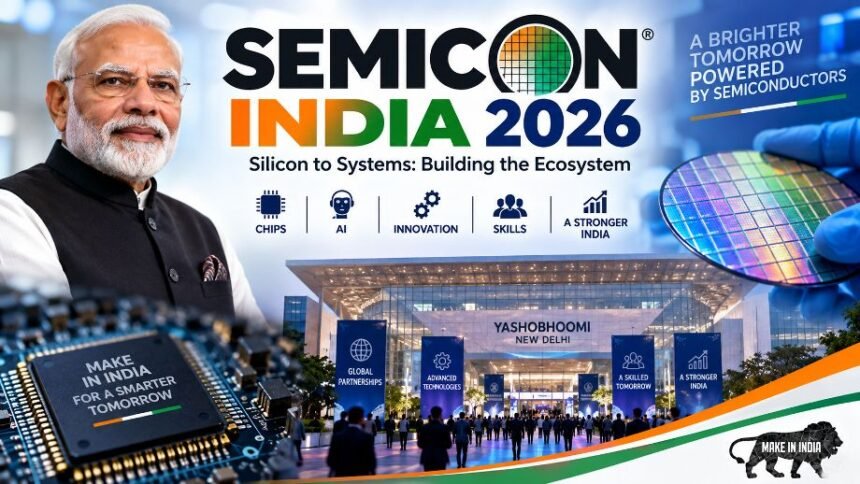
India’s push to establish itself as a significant player in the global semiconductor industry has entered another major phase with the launch of Semicon India 2026 in New Delhi. Prime Minister Narendra Modi inaugurated the fifth edition of the Semicon India at Yashobhoomi, bringing together semiconductor and electronics companies, policymakers, investors, researchers, startups and academic institutions from across the world.
The three-day event, being held from September 17 to September 19, is centered on the theme “Silicon to Systems: Building the Ecosystem.” The conference is designed to encourage greater collaboration, investment and innovation across the semiconductor sector while also focusing on the development of a skilled workforce for the industry.
More than 600 companies from 52 countries are participating in the event, including around 300 international companies. The large-scale participation reflects the growing international interest in India’s semiconductor ambitions and its efforts to build a stronger position in the global chip and electronics supply chain.
Focus on Chips, AI and Advanced Technologies
Semicon India 2026 features an exhibition spread across approximately 15,000 square metres, where participating companies are showcasing technologies and solutions from across the semiconductor and electronics ecosystem.
More than 150 speakers are taking part in different sessions during the conference. Discussions are covering a wide range of subjects, including semiconductor manufacturing, artificial intelligence, chip design, advanced packaging and resilient supply chains.
The event also has dedicated pavilions representing six countries, while 12 Indian state governments have set up their own pavilions to highlight their capabilities and opportunities in the semiconductor and electronics sectors.
Special platforms have been created for startups, innovation, students, workforce development and greater participation of women in the semiconductor industry. The startup pavilion alone features around 40 startups, giving emerging companies an opportunity to present their technologies and solutions to industry leaders and potential investors.
The Workforce Development Pavilion is focused on employment, training and skill-building opportunities in the microelectronics sector, underlining the importance of talent development as semiconductor manufacturing and related industries expand in India.
A Journey From Sand to Silicon to Systems
One of the notable attractions at this year’s event is a new value-chain experience titled “Sand to Silicon to Systems.”
The initiative is intended to give visitors a clearer understanding of how the semiconductor industry works from beginning to end. It demonstrates the journey from raw materials and chip manufacturing to advanced packaging and chip design, followed by electronics production and the development of complete end-use systems.
By presenting the different stages together, the experience highlights the interconnected nature of the semiconductor ecosystem and the range of capabilities required to build a complete industry.
Startups and Students Get a Dedicated Platform
Innovation and young talent are another important part of Semicon India 2026. The event includes a startup pitch competition, a student hackathon and an innovation showcase, providing opportunities for new ideas, research projects and technology solutions to reach the wider industry.
Strategic discussions during the conference are also addressing emerging areas such as artificial intelligence, quantum computing, supply-chain resilience, research and development, advanced packaging and talent development.
These initiatives are intended to connect students, researchers and startups with the wider semiconductor ecosystem and encourage the development of technologies and ideas that can contribute to the industry’s future growth.
PM Holds Roundtable With Semiconductor Leaders
Ahead of the formal inauguration, Prime Minister Narendra Modi held a roundtable discussion with senior executives from the semiconductor industry.
During the meeting, Modi emphasized the importance of active participation from the industry as India moves into the next phase of its semiconductor journey. He highlighted India’s talent pool, ability to adopt technology and expanding infrastructure as key strengths, while calling on companies to increase their focus on skill development, innovation and investment in emerging technologies.
The meeting brought together senior representatives from several major global and Indian companies, including Micron, Intel, AMD, ASML, Tata Electronics, Foxconn and IBM Research, among others.
The Prime Minister also referred to the goal of training one crore people in artificial intelligence, highlighting the broader emphasis on developing a technology-ready workforce alongside the growth of the semiconductor ecosystem.
Why Semicon India 2026 Matters to India
The fifth edition of Semicon India comes at a time when India is seeking to strengthen its role in the global semiconductor supply chain.
Semiconductors have become fundamental to modern economies, powering everything from smartphones and computers to automobiles, industrial equipment, artificial intelligence systems and advanced electronics. At the same time, growing demand for chips and the need for more dependable and diversified supply chains have created opportunities for countries seeking to expand their semiconductor capabilities.
For India, the objective extends beyond attracting chip manufacturing facilities. Building a competitive semiconductor ecosystem also requires capabilities in chip design, manufacturing, advanced packaging, electronics, research, skilled talent and complete systems development.
Semicon India 2026 brings these different elements together under one platform. Through its industry exhibition, country and state pavilions, startup programmes, student initiatives and high-level strategic discussions, the event is aimed at strengthening cooperation between government, industry, researchers, investors and the next generation of technology professionals.
With participation from more than 600 companies across 52 countries, the event provides a broad international platform for India to showcase its semiconductor ambitions while exploring new opportunities for investment, partnerships, innovation and workforce development.