

If your monthly salary seems to disappear faster than expected, small everyday expenses could be the reason. Food deliveries, unused subscriptions, impulse purchases and higher utility bills can quietly add hundreds or even thousands to your monthly spending.

The good news is that you don’t need to make drastic lifestyle changes to save money. By identifying unnecessary expenses and making a few simple adjustments, you can reduce your monthly expenses while still enjoying the things you need and like.
Here are 5 simple ways to reduce your monthly expenses without making your daily life unnecessarily difficult.
1. Track Where Your Money Goes
The first step to saving money is knowing where you are spending it. Many small purchases may not seem significant individually, but they can add up over an entire month.
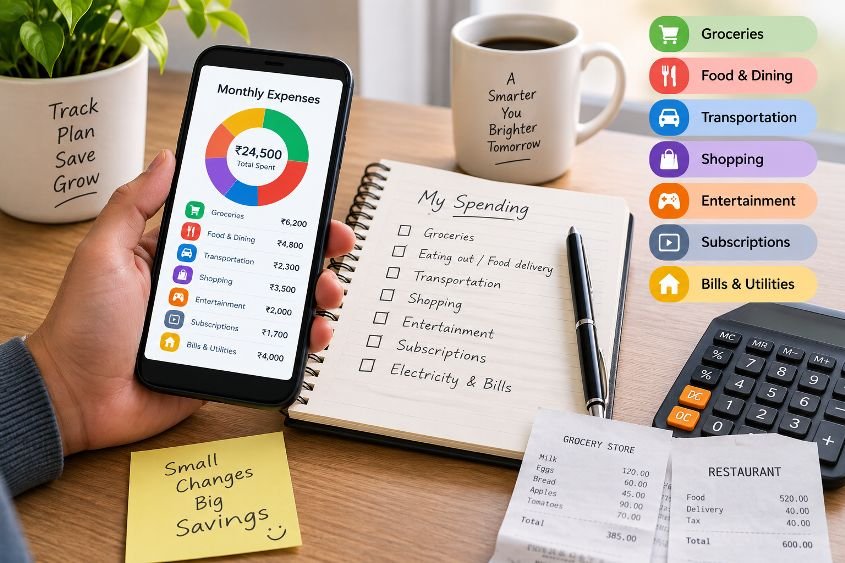
For one month, keep track of your spending across categories such as:
- Groceries
- Eating out and food delivery
- Transportation
- Shopping
- Entertainment
- Subscriptions
- Electricity and other household bills
At the end of the month, look for categories where you are spending more than expected.
Tip: You don’t have to track every expense manually. Your bank statements and UPI transaction history can also help you identify spending patterns.
2. Cut Unused Subscriptions
Monthly subscriptions can become an easy-to-miss expense. Streaming services, apps, cloud storage, memberships and other recurring payments may continue even when you rarely use them.
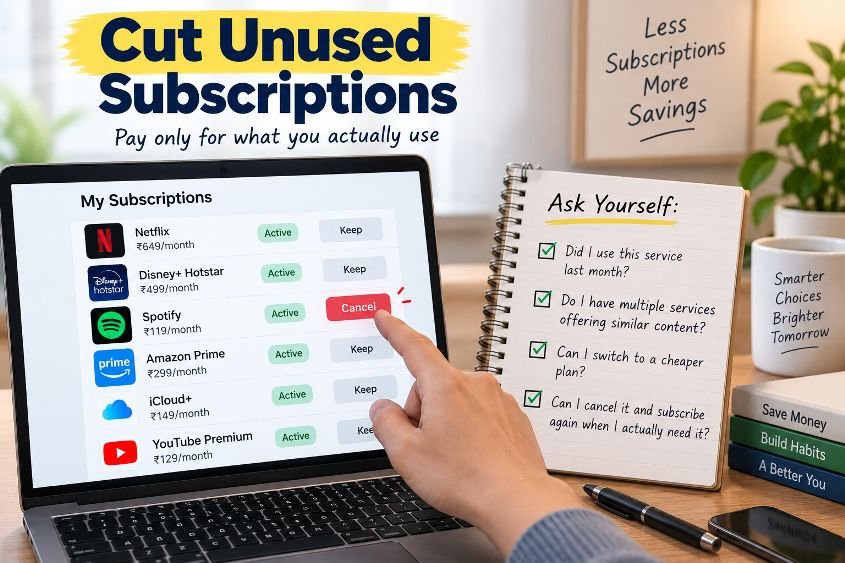
Check your recurring payments and ask yourself:
- Did I use this service last month?
- Do I have multiple services offering similar content?
- Can I switch to a cheaper plan?
- Can I cancel it and subscribe again when I actually need it?
Even cancelling two or three unused subscriptions can reduce your monthly expenses.
3. Reduce Food Delivery and Eating-Out Costs
Food delivery is convenient, but frequent orders can significantly increase your monthly spending. The actual cost can include the food, delivery charges, platform fees and taxes.

Instead of completely avoiding restaurants or food delivery, try setting a monthly limit.
You can also:
- Cook simple meals at home more often.
- Plan your meals before shopping for groceries.
- Carry homemade food to work when possible.
- Avoid ordering simply because of a discount.
- Compare the final delivery price with the cost of cooking at home.
A small reduction in food delivery spending every week can make a noticeable difference over a year.
4. Control Impulse Purchases
Not every purchase needs to happen immediately. Online shopping makes it extremely easy to buy something within minutes, especially when limited-time offers and discounts create a sense of urgency.

Before buying a non-essential item, use a simple 24-hour rule: wait a day before completing the purchase.
Ask yourself:
- Do I actually need this?
- Do I already own something similar?
- Was this purchase planned?
- Would I still want it without the discount?
This simple habit can help reduce unnecessary spending without requiring a strict shopping ban.
5. Reduce Your Household Bills
Some monthly bills can be lowered by changing everyday habits.
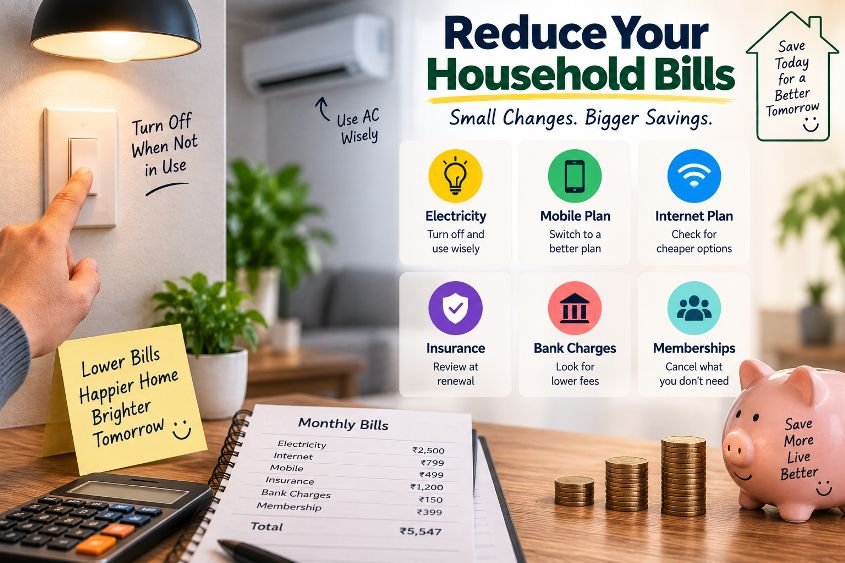
Start with electricity and other household expenses. Turn off lights and appliances when they aren’t being used, avoid unnecessary air-conditioning use and check whether you are paying for services you no longer need.
You can also review:
- Mobile plans
- Internet plans
- Electricity usage
- Insurance premiums when renewal comes up
- Banking and service charges
- Household memberships
Don’t automatically renew every service at the same price. Check whether a more suitable or cheaper option is available.
Quick Comparison: Where You Can Save
| Expense Area | Simple Change | Potential Benefit |
|---|---|---|
| Subscriptions | Cancel unused services | Lower recurring costs |
| Food | Cook at home more often | Fewer weekly expenses |
| Shopping | Follow a 24-hour rule | Fewer impulse purchases |
| Utilities | Reduce unnecessary usage | Lower household bills |
| Daily spending | Track expenses | Better spending control |
How to Start Saving This Month
You don’t need to change everything at once. Start with these three steps:
- Track your spending for the next 30 days.
- Identify your three biggest unnecessary expenses.
- Set a realistic monthly spending limit for those categories.
Once you understand where your money is going, it becomes much easier to decide where you can cut back.
Conclusion
Reducing your monthly expenses doesn’t necessarily mean giving up everything you enjoy. Small changes, such as cancelling unused subscriptions, ordering less food, controlling impulse purchases and reducing household bills, can gradually improve your monthly budget.
The key is consistency. Even a small amount saved each month can add up over time. Start with one expense today and build better spending habits gradually.