
Delhi Winter Pollution Rules: Delhi is preparing for another challenging winter pollution season, with the government announcing a set of measures aimed at reducing dust, traffic emissions and other pollution sources across the capital.
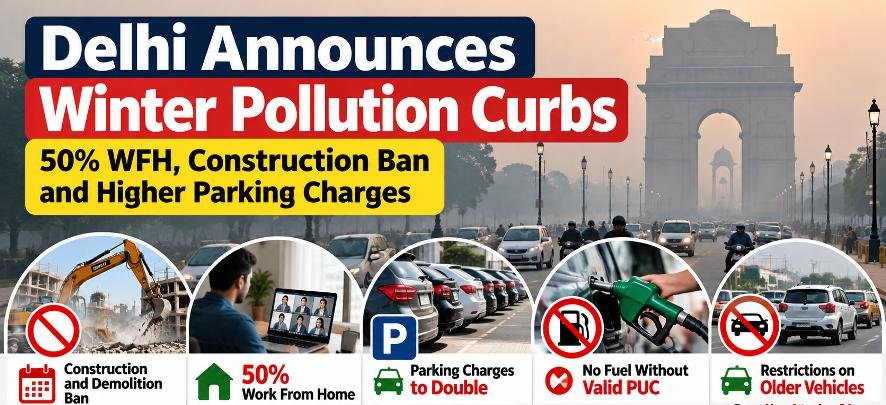
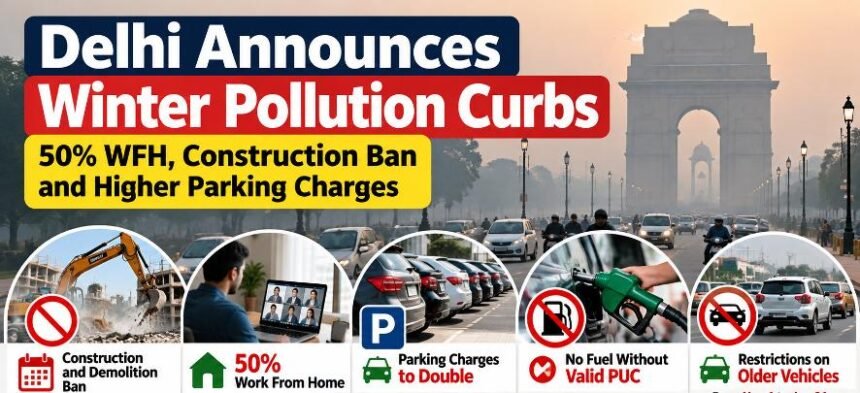
The new winter framework will come into effect from November 1, 2026, with several restrictions continuing through February 28, 2027. The measures include restrictions on construction and demolition, reduced office attendance, higher parking fees and tighter controls on vehicles.
Construction and Demolition Restrictions
Dust-generating demolition work and outdoor civil construction activities will face restrictions during the winter period.
A stricter phase is scheduled from December 10, 2026, to January 20, 2027, when construction activity will face a complete ban under the announced measures. During this period, vehicles carrying construction materials such as sand, gravel and cement from outside Delhi will also face restrictions on entering the capital.
The move is aimed at controlling construction-related dust, which contributes to particulate pollution in Delhi.
50% Work From Home for Offices
One of the measures likely to have the biggest impact on daily commuters is the reduction in office attendance.
From November 1 to February 28, government and private offices will operate with 50% of their workforce physically present, while the remaining employees will work from home.
Essential services will be exempt from the arrangement.
The government is also changing office timings to spread traffic across different periods of the day. MCD offices will operate from 8:30 am to 5:00 pm, while Delhi government offices will function from 10:00 am to 6:30 pm.
Parking Charges to Double
To discourage private vehicle use during the pollution season, parking fees at authorised parking facilities will be doubled from November 1 to February 28.
However, parking facilities owned and operated by the Delhi Metro Rail Corporation (DMRC) are excluded from the higher charges.
The measure is intended to reduce both traffic pressure and vehicle-related emissions during the winter months.
No Fuel Without a Valid PUC Certificate
Delhi has also introduced a year-round rule requiring vehicles to have a valid Pollution Under Control (PUC) certificate to purchase fuel.
Petrol, diesel and CNG/LPG outlets will be required to check the validity of the certificate before supplying fuel. The verification is linked to digital vehicle databases, including the VAHAN system.
Unlike the other measures, this requirement is not limited to the winter season.
Restrictions on Older Vehicles From Outside Delhi
From November 1 to January 31, vehicles registered outside Delhi and falling below the BS-VI emission standard will face restrictions on entering or operating in the capital under the winter pollution framework.
There are exemptions for certain cleaner or essential categories, including CNG and electric vehicles, as well as emergency-service vehicles.
Why Delhi Is Taking These Steps
Winter weather conditions can make pollution more difficult to disperse, while emissions from vehicles, construction, road dust, industries and open burning can add to the problem.
Delhi has therefore moved toward a more structured winter pollution framework, with several measures designed to automatically come into force during the pollution-sensitive period rather than relying only on emergency restrictions.
The government has also been increasing monitoring and enforcement ahead of the winter season. Recent preparations have focused on road dust, construction activity, traffic management, vehicle emissions and pollution hotspots.
Key Dates at a Glance
- November 1, 2026: Winter restrictions begin.
- November 1–February 28: 50% office attendance, higher parking charges and other seasonal measures.
- November 1–January 31: Restrictions on certain below-BS-VI vehicles registered outside Delhi.
- December 10–January 20: Stricter construction and demolition restrictions.
- PUC rule: Applies throughout the year, not just during winter.
For Delhi residents, the new measures could mean changes to office routines, commuting costs, vehicle use and construction activity as the city enters the 2026-27 winter pollution season.