
Nepal has stepped up its demand for climate compensation following a devastating flood disaster that has reportedly killed 1,127 people, while more than 4,800 remain missing.
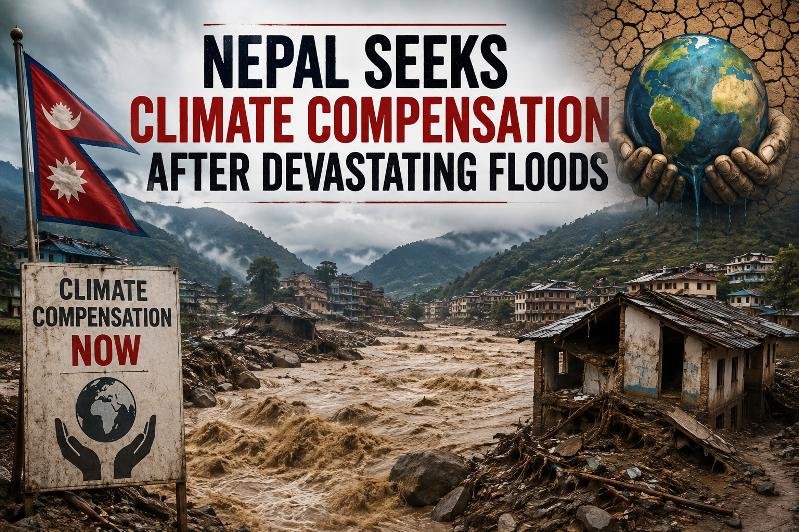
The Himalayan nation argues that its contribution to global greenhouse gas emissions is extremely small, yet it is facing some of the most severe consequences of climate change. Rapidly melting glaciers and increasingly extreme weather events are raising concerns across the Himalayan region.
Nepal Shifts From Aid to Climate Justice
According to reports by The Kathmandu Post, Foreign Minister Shishir Khanal said Nepal no longer wants to view post-disaster assistance simply as humanitarian aid.
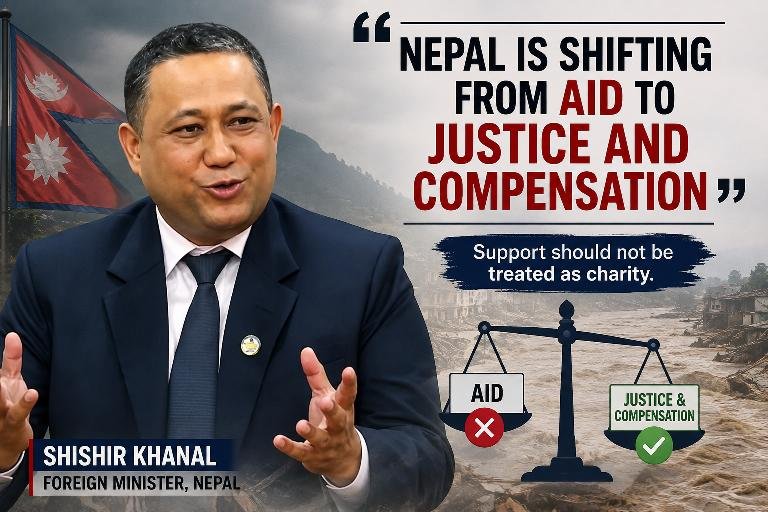
Instead, the country wants to focus on climate responsibility, justice and compensation. Khanal said Nepal is shifting its diplomatic approach from “aid to justice and compensation,” arguing that support should not be treated as charity.
Nepal has also reportedly sent formal climate compensation claim letters to international partners.
The country is expected to require billions of dollars for reconstruction and recovery following the disaster. However, the reported $4–5 billion reconstruction requirement should not be described as a confirmed $5 billion climate-compensation claim to the United Nations.
Nepal Questions Responsibility of Major Emitters
Khanal pointed to China, the United States and India as among the world’s major industrial emitters. Nepal’s argument is that countries with historically higher emissions should take greater responsibility for helping climate-vulnerable nations.
Nepal has consistently highlighted the vulnerability of the Himalayan region, where glacier melt and extreme weather could threaten water resources for millions of people across South Asia.
Nepal Calls Disaster a ‘Himalayan Tsunami’
Describing the scale of the disaster, Khanal reportedly rejected the idea that it was simply a normal flood. He claimed that water waves reached 20 to 30 metres in height and travelled at speeds of up to around 180 kmph.
He described the event as a “Himalayan tsunami” and warned that continued glacier melting could pose a serious threat to rivers such as the Ganga and Trishuli.
The issue has renewed calls for greater international action on climate change, disaster resilience and compensation for vulnerable Himalayan countries.