

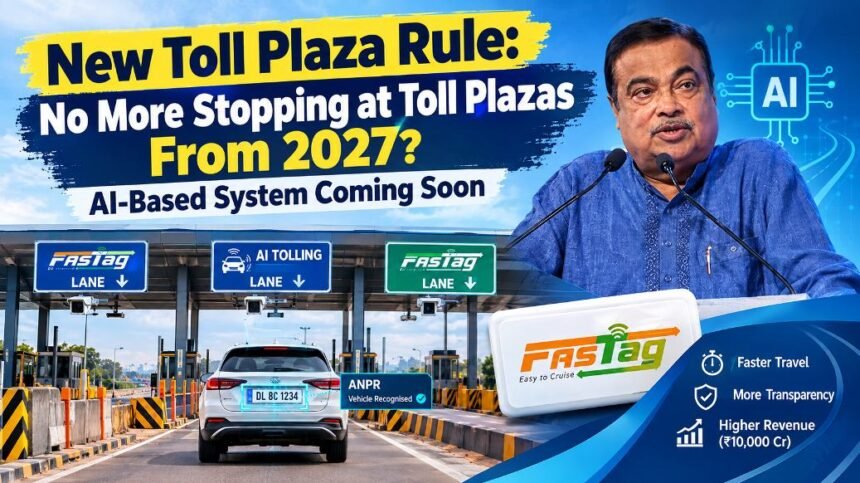
National highway commuters could soon get a major relief as India moves towards a fully digital and barrier-free toll collection system. The government is working on an AI-based tolling system that is expected to be implemented by February-March 2027, allowing vehicles to pass through toll points without stopping.
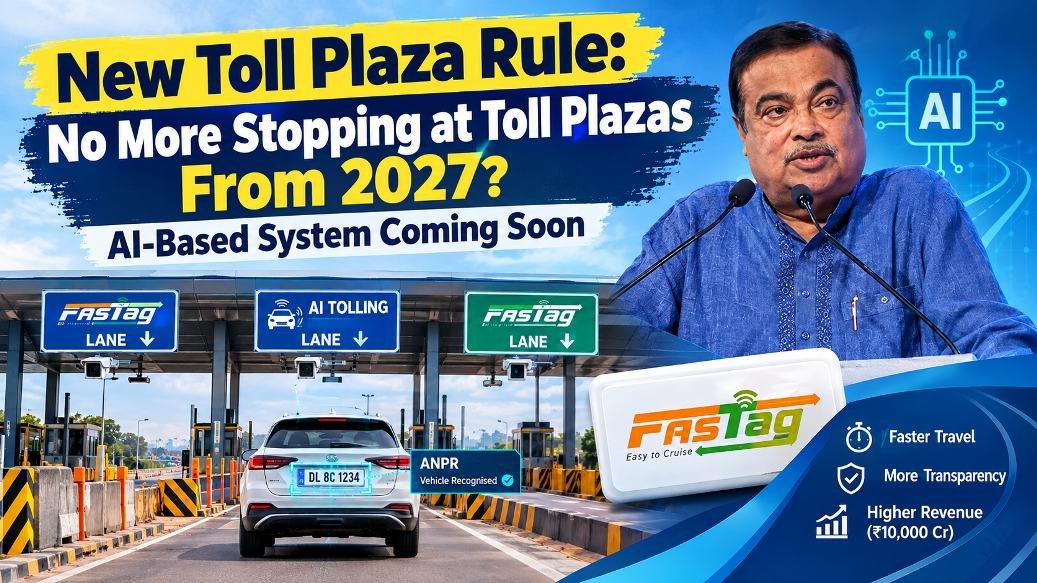
Union Minister for Road Transport and Highways Nitin Gadkari made the announcement while addressing the Global Fintech Fest 2026. He said the new system would help eliminate the traditional toll plaza stopping process and make highway travel more seamless.
The new system is also expected to increase the government’s annual toll revenue by around Rs 10,000 crore by improving transparency and efficiency in toll collection.
AI-Based Tolling System Expected by March 2027
Speaking at the Global Fintech Fest 2026, Nitin Gadkari said India is moving towards an intelligent and barrier-free highway network.
The AI-powered tolling system is expected to be operational by February-March 2027. Once implemented, motorists will be able to pass through toll points without having to stop at toll booths.
Gadkari said that through AI and seamless tolling technology, India is working to end the traditional system of stopping at toll plazas. He described the highway system of the future as intelligent, barrier-free and completely cashless.
How Will the New Toll System Work?
The proposed system will integrate Automatic Number Plate Recognition (ANPR) technology with FASTag for automated toll collection.
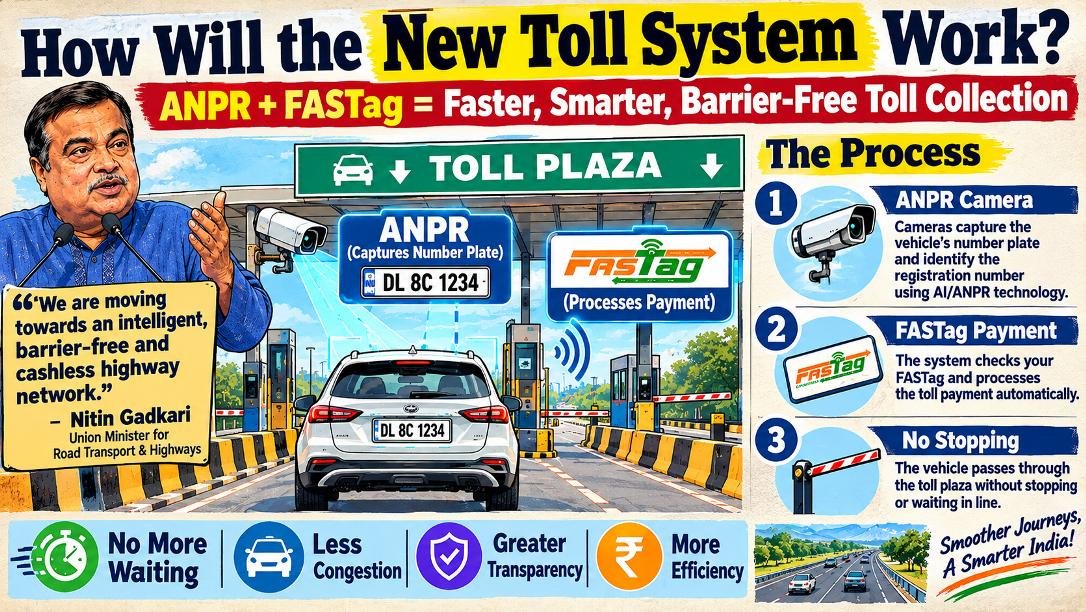
Under the system, cameras and other technologies will identify a vehicle’s registration number while FASTag will be used to facilitate the toll payment. This integration is aimed at eliminating waiting at toll plazas and allowing vehicles to continue their journey without stopping.
The move is expected to make toll collection faster while reducing congestion around toll plazas.
FASTag Has Already Reduced Waiting Time
Gadkari also highlighted the growth of FASTag in India. According to the minister, FASTag was initially introduced as a pilot project in 2014 and was made mandatory in 2021.
Today, more than 98% of vehicles using national highway toll plazas have FASTag, while more than 13 crore FASTags have been issued across the country.
The FASTag system has already reduced the earlier waiting time at toll plazas, which ranged from around 12 to 30 minutes, by approximately 80-90%.
The government now expects the next generation of digital tolling to eliminate waiting even further by allowing vehicles to pass through toll points without stopping.
Toll Revenue Could Rise by Rs 10,000 Crore
Apart from saving motorists’ time, the barrier-free digital tolling system is expected to improve transparency in toll collection.
The government estimates that the new system could increase annual toll revenue by approximately Rs 10,000 crore. Automated identification and digital payment mechanisms are expected to make toll collection more efficient and reduce possible leakages.
No Need to Buy a New FASTag to Change Banks
Along with the new tolling system, the government has also introduced a new ‘OneTag’ facility.
Nitin Gadkari launched the OneTag facility at the Global Fintech Fest 2026. Under this system, FASTag users will be able to change or port their linked bank account without purchasing a new FASTag.
Currently, changing the FASTag issuing bank may require users to remove their existing tag and obtain a new one. With OneTag, users will be able to change their bank without removing the existing FASTag from their vehicle.
The initiative is expected to make FASTag management simpler and provide greater flexibility to vehicle owners as India moves towards a more advanced digital tolling ecosystem.