

Suzuki is developing a new 1.2-litre three-cylinder direct-injection turbo-petrol engine that could power some of its future cars in markets such as India.
The new engine was showcased in Japan as part of Suzuki’s Technology Strategy 2026. While the company has not officially confirmed an India launch, its specifications and multi-fuel capability make the engine particularly interesting for the Indian market.
Suzuki 1.2-Litre Turbo Engine: Key Specifications
The new engine is based on Suzuki’s Z12E three-cylinder petrol architecture, which is already used in naturally aspirated form in models such as the Swift, Baleno and Dzire.
The turbocharged version adds direct fuel injection and a variable-geometry turbocharger.
Expected specifications include:
- Engine: 1.2-litre, 3-cylinder
- Technology: Direct injection and turbocharging
- Power: Up to 126 hp
- Torque: Up to 230 Nm
- Turbocharger: Variable-geometry turbocharger
- Intercooler: Water-cooled
- Fuel compatibility: E100, CNG and CBG
These figures are development targets and could change before the engine enters production.
Why 230 Nm Torque Is Important
The engine’s targeted 230 Nm of torque could give Suzuki’s smaller cars considerably stronger performance.
For comparison, the 1.0-litre Boosterjet engine used in the Fronx produces around 99 hp and 148 Nm of torque.
The new 1.2-litre turbo engine could therefore offer significantly more torque while retaining a relatively compact engine size.
Designed for E100, CNG and CBG
One of the most interesting aspects of Suzuki’s new engine is its planned compatibility with E100, CNG and CBG.
E100 refers to fuel containing up to 100% ethanol, while CBG stands for compressed biogas.
This approach could give Suzuki more flexibility as alternative fuels become increasingly important in markets such as India.
Suzuki Is Also Targeting Higher Efficiency
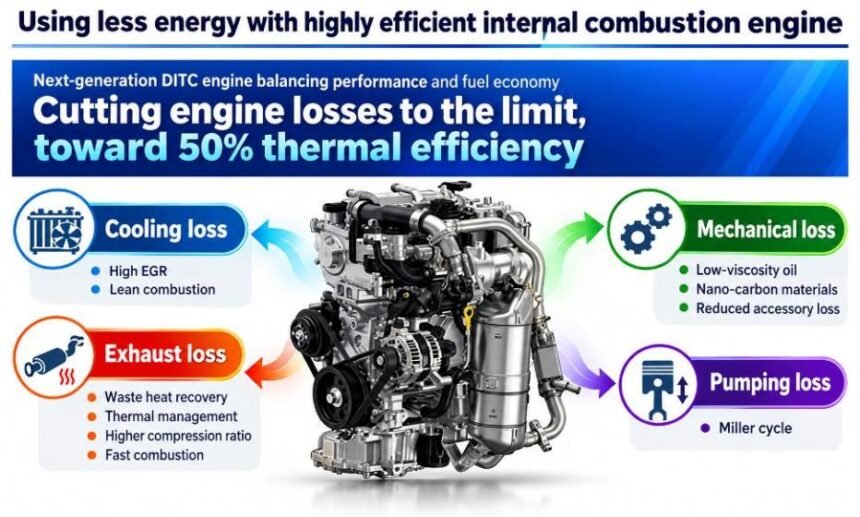
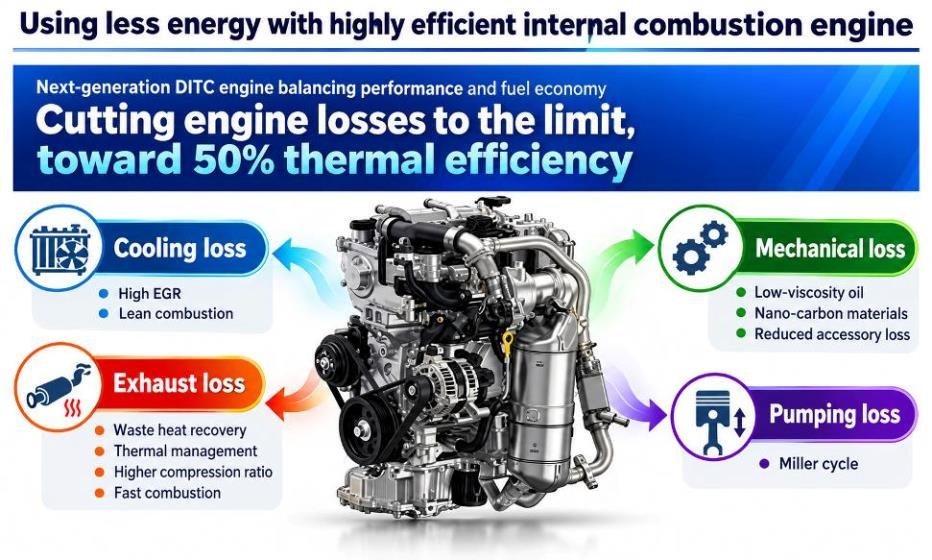
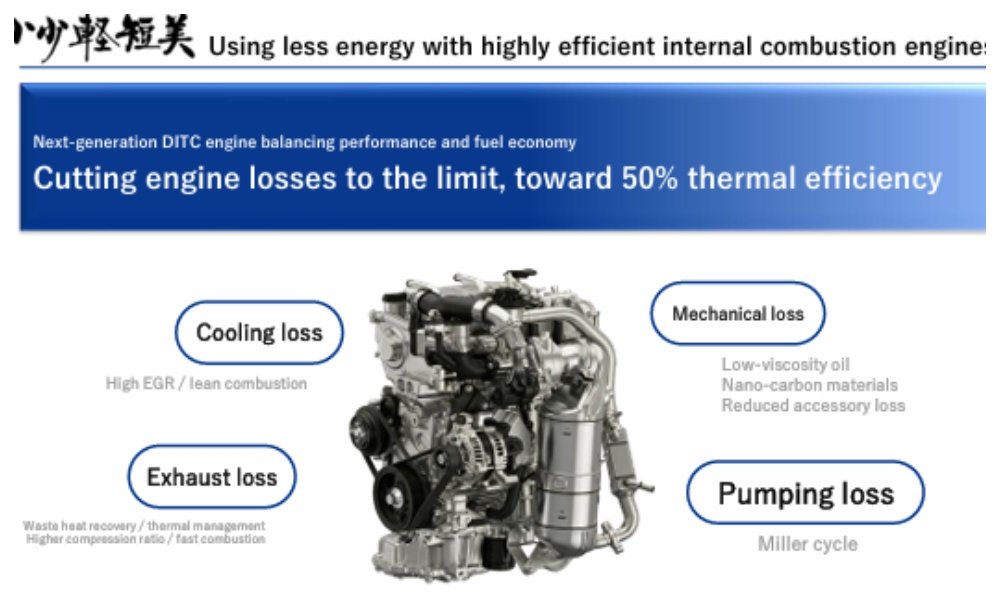
Suzuki is not focusing only on power. The company is also working on improving the thermal efficiency of its internal-combustion engines.
Suzuki has outlined a longer-term target of achieving up to 50% thermal efficiency by 2035.
The company is exploring technologies such as lean combustion, improved exhaust-gas recirculation, the Miller cycle, waste-heat recovery and reduced mechanical losses.
In simple terms, higher thermal efficiency means more of the energy in the fuel can be converted into useful power instead of being lost as heat.
Could the 1.2-Litre Turbo Engine Come to India?
It could, but Suzuki has not officially confirmed an India launch yet.
India is one of the key growth markets for Suzuki, and the company has identified markets such as India as potential destinations for its new direct-injection turbo engine technology.
However, there is currently no confirmed launch date, vehicle application or India-specific specification.
If introduced in India, the engine could potentially be used in compact SUVs and other models where customers want stronger performance without moving to a larger engine.
There has also been speculation about its use in sub-4-metre vehicles, but Suzuki has not confirmed which models could receive the engine.
Suzuki Is Also Developing a 1.5-Litre Turbo
The 1.2-litre engine is not the only turbocharged powertrain Suzuki is developing.
The company has also revealed a 1.5-litre four-cylinder direct-injection turbo-petrol engine targeting up to 160 hp and 280 Nm.
Like the smaller engine, it is being developed with E100, CNG and CBG compatibility in mind.
Suzuki is also working on a 1.2-litre series-hybrid system and exploring ways to combine its turbocharged engines with hybrid technology.
What Could It Mean for Maruti Suzuki?
If the new engine eventually comes to India, it could give Maruti Suzuki a new option between naturally aspirated petrol engines and larger turbocharged powertrains.
The biggest questions are still unanswered: which Maruti model could get the engine, when production could begin, what transmission would be paired with it and whether the India-spec version would offer the same output.
For now, Suzuki has revealed the technology and its development plans, but an official India launch has not yet been announced.