


OpenAI has introduced Dots, a new class of always-on AI agents designed to work toward users’ goals even when they are not actively chatting with them. The company unveiled Dots at its DevDay event in San Francisco on September 29, marking another major step in its push to move AI beyond traditional chatbot interactions.
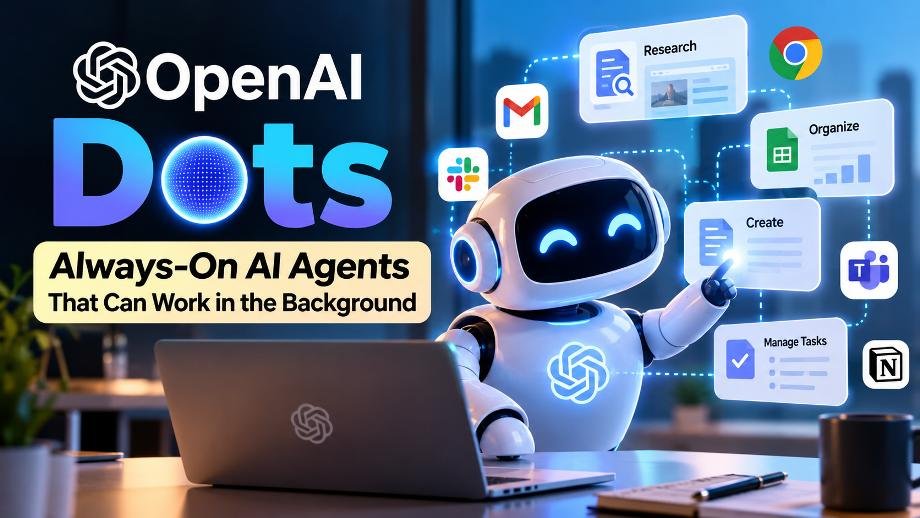
Unlike a conventional chatbot that waits for a prompt, Dots are designed to remain active and continue working on tasks in the background. OpenAI says they can get to know a user’s preferences, work across applications and return with progress, questions or completed work.
What Are OpenAI Dots?
Dots are AI agents powered by GPT-6 Astra. Each Dot operates with access to a dedicated cloud computer and browser, allowing it to perform multi-step tasks rather than simply generate text in a conversation. OpenAI describes them as agents built to handle ongoing work on a user’s behalf.
The technology is aimed particularly at tasks that require several steps or continued attention.
For example, a Dot could potentially research information, organize data, work on software projects or help manage ongoing business tasks.
How Dots Are Different From ChatGPT
The biggest difference is persistence.
With a normal ChatGPT conversation, the user generally asks a question and receives an answer. Dots are designed to take responsibility for a longer-running goal and continue working after the initial interaction.
OpenAI says Dots can also interact through platforms such as Slack and Microsoft Teams, giving users another way to communicate with their agents.
Dots Can Connect to Other Apps
Another important part of the system is its ability to work with external applications.
Reports around the launch say Dots can connect to more than 4,000 applications through OpenAI’s ecosystem, potentially allowing agents to operate across the software tools people already use.
That could make Dots particularly useful for businesses where work is spread across email, communication platforms, project-management tools and other services.
Safety and User Controls
The move toward always-on agents also creates a different safety challenge from traditional chatbots.
An AI that can independently browse websites, use applications and perform actions needs stronger controls because mistakes can have real-world consequences.
OpenAI says Dots include safety rules and permission controls designed to limit what agents can do. The company has also added monitoring and review mechanisms as part of its approach to agent safety.
OpenAI’s Bigger AI Agent Push
Dots are part of OpenAI’s broader effort to make AI systems capable of completing work instead of simply answering questions.
The company has increasingly focused on agentic systems, including its Agents API, Codex and data-focused agents. Dots take that idea further by making the agent persistent and proactive.
The launch also puts OpenAI into closer competition with other companies developing autonomous AI assistants, including Meta’s Muse.
The Bigger Picture
The arrival of Dots highlights a major shift in AI: from asking an AI to do something to giving an AI responsibility for a goal.
If these systems become reliable enough, users could increasingly delegate repetitive research, software, data and business tasks to AI agents while remaining in control of important decisions.
For now, the biggest question is not simply how capable these agents can become, but how reliably and safely they can operate when humans are not watching every step.