
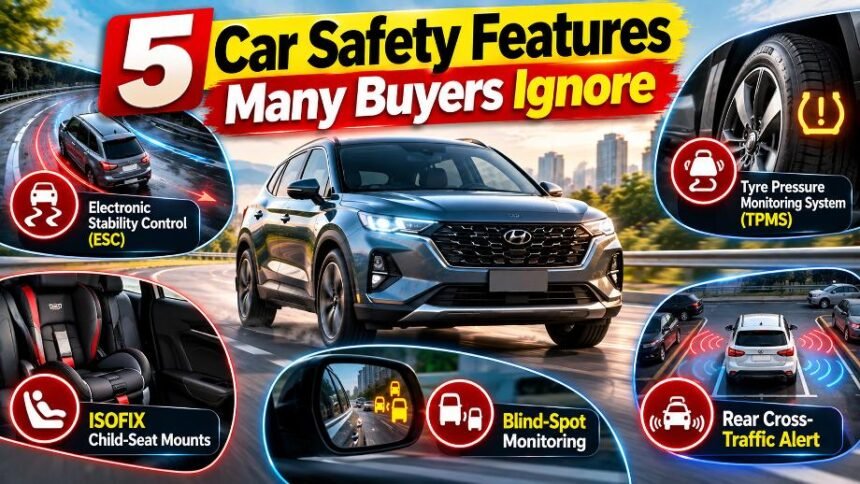
When buying a new car, most people check the engine, mileage, price, features and design. Safety is also important, but buyers often focus only on airbags and ABS.
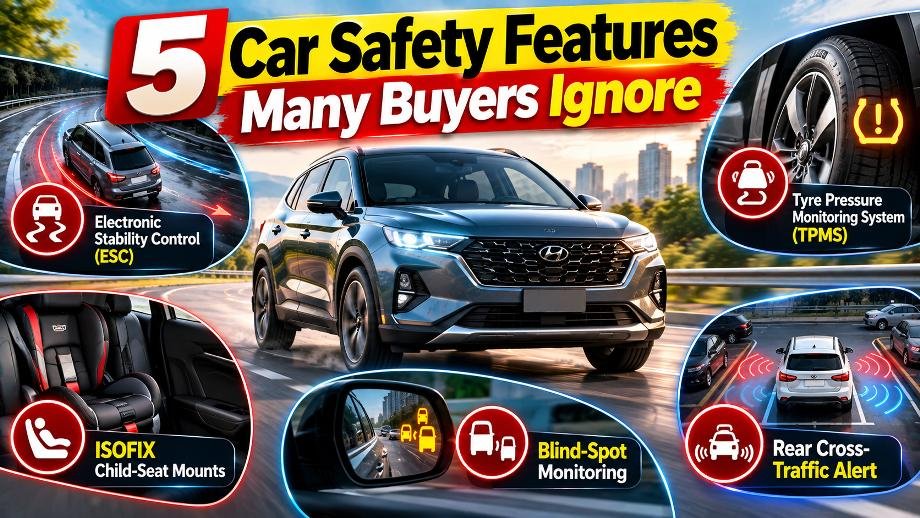
Modern cars offer several additional safety technologies that can help drivers avoid accidents or maintain better control in difficult situations.
Here are 5 important car safety features that many buyers overlook.
1. Electronic Stability Control (ESC)
Electronic Stability Control (ESC) helps a car maintain stability when it detects that the vehicle is beginning to lose directional control.
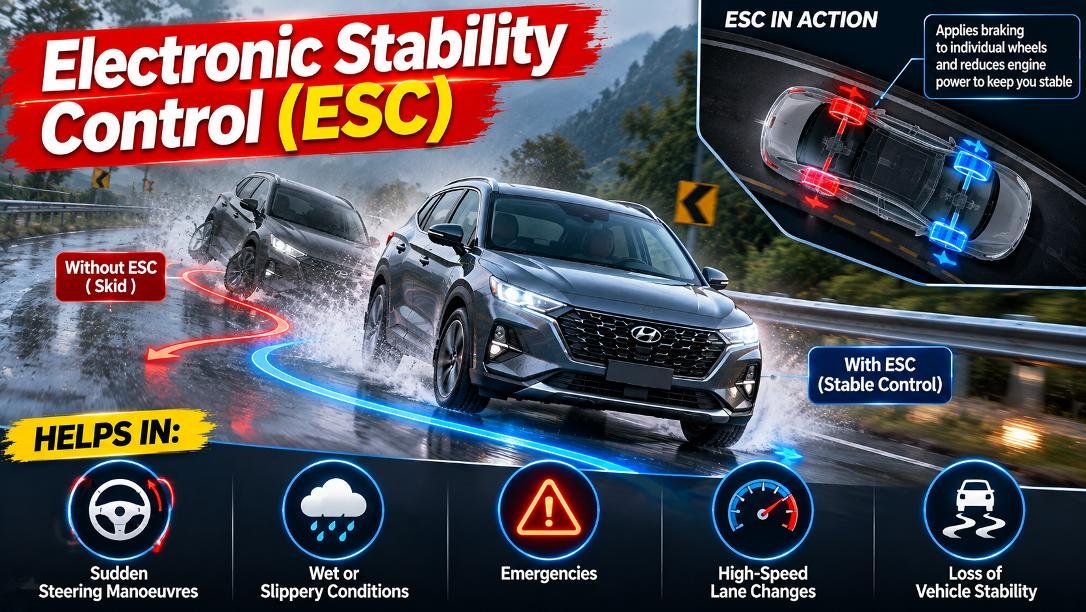
For example, if a driver suddenly swerves to avoid an obstacle or the car starts sliding on a wet road, ESC can selectively apply braking to individual wheels and reduce engine power to help stabilize the vehicle.
Why it matters
ESC can be useful during:
- Sudden steering manoeuvres
- Wet or slippery conditions
- Emergencies
- High-speed lane changes
- Loss of vehicle stability
When comparing cars, check whether ESC is standard across all variants or available only on selected versions.
2. Tyre Pressure Monitoring System (TPMS)
TPMS monitors tyre pressure and warns the driver when pressure falls below a specified level.
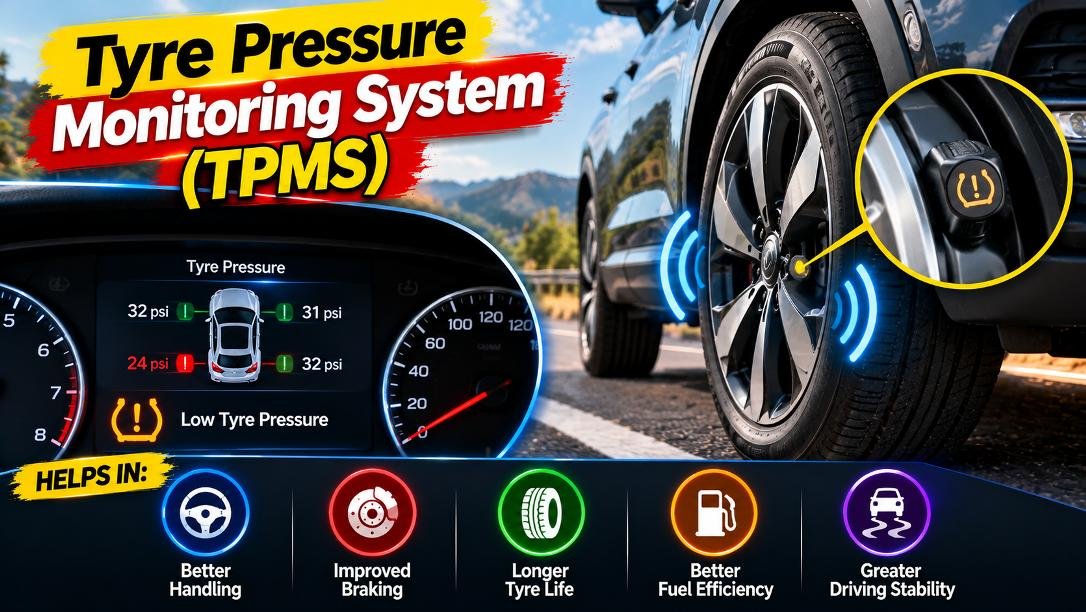
A tyre doesn’t necessarily look flat when it has lost pressure, which makes this feature particularly useful.
Why it matters
Incorrect tyre pressure can affect:
- Handling
- Braking
- Tyre life
- Fuel efficiency
- Driving stability
Some systems simply provide a low-pressure warning, while more advanced systems can show the pressure of individual tyres.
If two variants are otherwise similar, TPMS is a feature worth checking.
3. ISOFIX Child-Seat Mounts
If you have young children, ISOFIX is one safety feature you shouldn’t overlook.
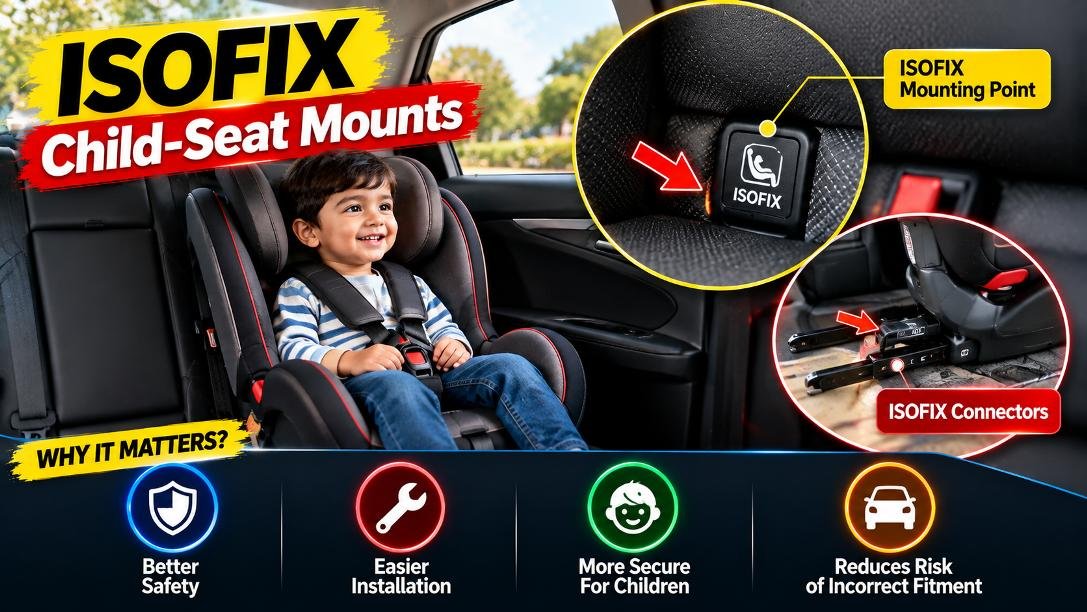
ISOFIX provides dedicated mounting points for compatible child seats, making installation more straightforward than relying solely on the vehicle’s seat belt.
Why it matters
A properly installed child seat can provide additional protection for young passengers.
Before buying a car or child seat, check the manufacturer’s instructions for compatibility and correct installation.
For families, ISOFIX can be much more useful than some of the flashy features highlighted in a car’s brochure.
4. Blind-Spot Monitoring
Blind-Spot Monitoring uses sensors to detect vehicles travelling in areas that may be difficult for the driver to see through the normal mirrors.
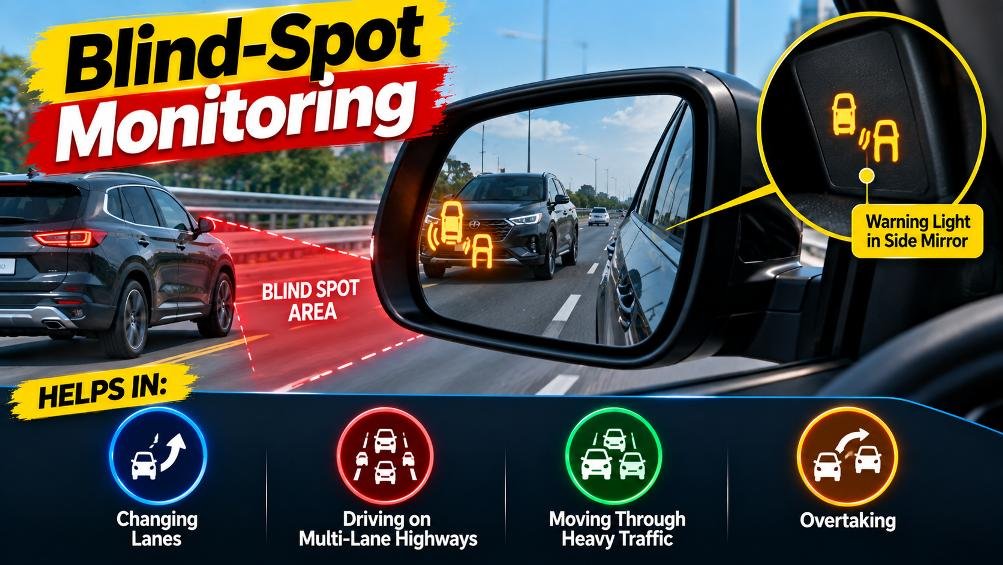
The system can provide a visual or audible warning when another vehicle is detected in the blind spot.
Why it matters
It can be particularly helpful when:
- Changing lanes
- Driving on multi-lane highways
- Moving through heavy traffic
- Overtaking
It is an assistance system, not a replacement for checking mirrors and surroundings.
5. Rear Cross-Traffic Alert
Rear Cross-Traffic Alert (RCTA) can warn the driver about approaching vehicles or traffic while reversing.
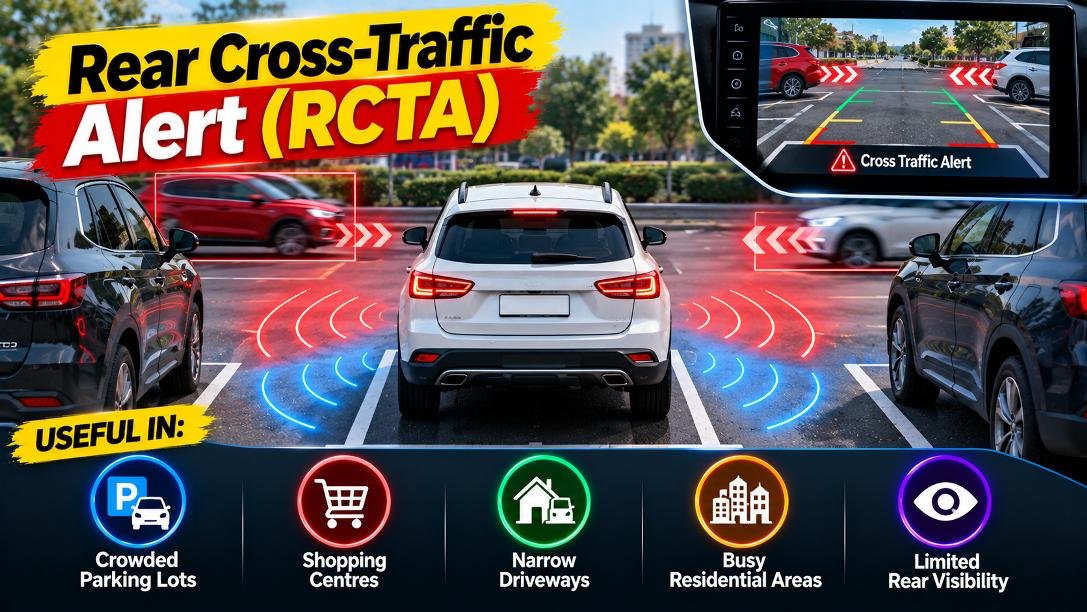
Imagine backing out of a parking space between two large SUVs. Your rear camera may show what’s directly behind you, but the parked vehicles can block your view of traffic approaching from the sides.
RCTA can provide an additional warning in such situations.
Why it matters
It can be useful in:
- Crowded parking lots
- Shopping centres
- Narrow driveways
- Busy residential areas
- Situations with limited rear visibility
As with other driver-assistance technologies, the driver should still check the surroundings before reversing.
Other Safety Features Worth Checking
These five aren’t the only technologies worth considering.
Depending on the car and variant, you may also find:
- ABS — Helps prevent wheel lock-up during hard braking.
- EBD — Helps distribute braking force between the wheels.
- Traction Control — Helps reduce excessive wheelspin.
- Rear Parking Sensors — Help detect obstacles behind the vehicle.
- Rear Camera — Provides a view behind the car while reversing.
- ADAS — Includes driver-assistance features such as lane assistance, collision warnings and adaptive cruise control.
- Airbags — Provide additional protection during certain crashes.
Don’t Look at Just the Number of Airbags
A car having six airbags doesn’t automatically tell you everything about its safety equipment.
When comparing two cars, look at the complete safety package, including:
ESC + ABS + TPMS + airbags + parking sensors + camera + ISOFIX + ADAS + blind-spot monitoring + crash-test performance.
Also check whether a feature is available on the specific variant you’re planning to buy.
What Should Different Buyers Prioritise?
Family buyers:
ISOFIX, airbags, ESC, ABS and crash-test performance should receive particular attention.
Frequent highway drivers:
ESC, blind-spot monitoring, ADAS and tyre-pressure monitoring can be useful additions.
Mostly city drivers:
Parking sensors, rear camera, ESC and TPMS can make everyday driving easier.
New drivers:
ESC, ABS, parking sensors, camera and driver-assistance systems can provide useful additional support.
Final Takeaway
Car safety is about much more than airbags.
Features such as ESC, TPMS, ISOFIX, blind-spot monitoring and rear cross-traffic alert can provide valuable assistance in everyday driving situations.
The next time you compare two cars, don’t just look at BHP, mileage and touchscreen size. Check the complete safety specification too.
A few minutes spent comparing safety equipment could be more valuable than choosing another cosmetic or convenience feature.