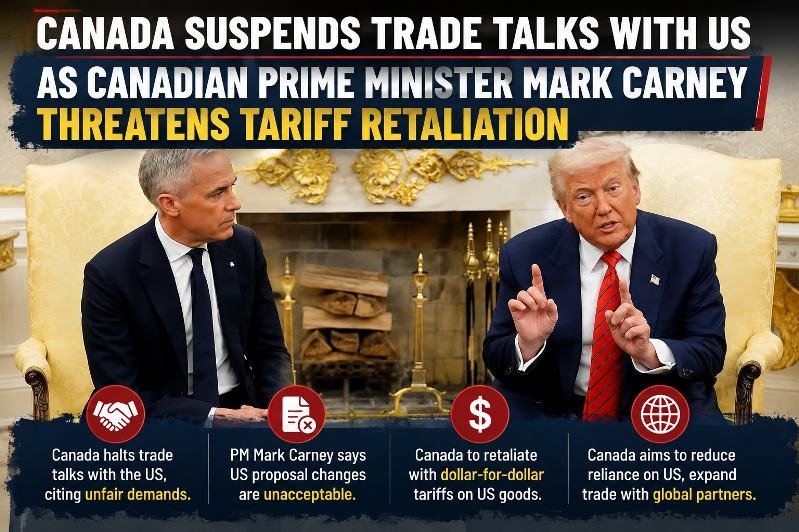

Canada-US Trade War: US President Donald Trump has accused Canada of seeking the advantages of being part of the United States without actually becoming a state, after trade negotiations between the two countries broke down.
Trump made the comments after talks ended without an agreement, paving the way for new 50% US tariffs on a range of Canadian products. The latest dispute has further strained relations between two countries whose economies are closely connected.
Trump Criticises Canada After Talks Fail
In his first public comments after negotiations collapsed, Trump said Canada wanted the “benefits” of being a US state without accepting the responsibilities that would come with it.
He also argued that American farmers had faced what he described as “massive amounts of Tariffs” from Canada for years. The remarks reflect Trump’s broader approach to trade, which focuses on reducing what he sees as unfair treatment of US businesses and workers.
Trump has repeatedly suggested that Canada could become the 51st US state since returning to the White House. Canadian political leaders have strongly rejected the idea, while the comments have become a major source of tension between the neighbours.
Carney Calls New Tariffs a “Miscalculation”
Canadian Prime Minister Mark Carney sharply criticised Washington’s latest move, calling the new tariffs a “miscalculation” that could hurt both countries.
Carney said Canada would respond with its own tariffs from 8 September, matching the US measures “dollar-for-dollar”. The Canadian counter-tariffs are expected to cover products including steel, dairy goods, appliances and electronics.
“We got attacked,” Carney said, describing the situation as a trade war. He added that Canada could not accept the terms offered during the negotiations.
Earlier in the week, both governments had appeared hopeful that a deal could be reached. However, the discussions eventually collapsed after each side accused the other of introducing changes at the last minute.
What the New US Tariffs Mean
The latest 50% US tariffs will affect a selected group of Canadian imports. They add to existing American tariffs on products such as Canadian steel, aluminium, automobiles and lumber.
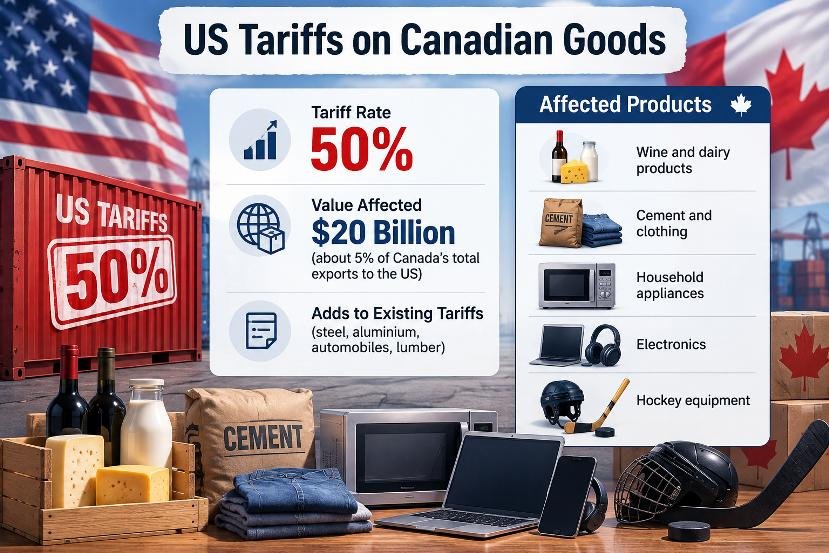
The new measures are relatively limited in overall scope. They cover around $20 billion (£15 billion; C$28 billion) worth of Canadian imports, representing roughly 5% of Canada’s total exports to the United States.
Affected products include:
- Wine and dairy products
- Cement and clothing
- Household appliances
- Electronics
- Hockey equipment
Carney said Canada’s response was being taken reluctantly and was intended to protect Canadian businesses and workers from the impact of the US measures.
Canada Faces Political Unity Over Tariffs
The dispute has also brought Canada’s major political parties closer together. Leaders from other federal parties, including the Conservative opposition, have expressed support for the government’s response.
Several provincial leaders have also backed Carney as Canada prepares to respond to the new US tariffs.
The situation is particularly significant because Canada and the US have deeply connected supply chains and depend heavily on each other for trade. Prolonged tariffs could therefore affect businesses, workers and consumers on both sides of the border.
Why Tariffs Matter
Tariffs are taxes imposed on goods imported from another country. Trump has made them a central part of his economic strategy, arguing that they can encourage companies to manufacture more products in the United States and create American jobs.
Critics, however, argue that tariffs can increase costs for businesses and consumers. They can also disrupt international supply chains and create uncertainty for companies that rely on cross-border trade.
For now, there is no clear solution to the latest US-Canada dispute. With Washington and Ottawa preparing additional measures, the trade conflict could put further pressure on one of the world’s most important economic relationships.